
Automotive Electronics: Components, AI, Autonomous Driving & Future
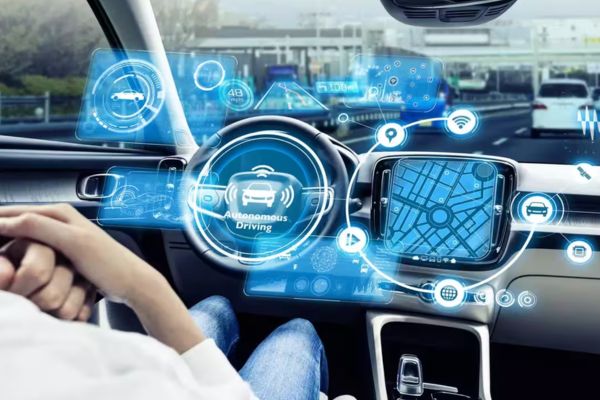
Source: timestech.in
Automotive electronics encompass the electronic components, control systems, sensors, software, communication networks, and semiconductor technologies used to monitor, control, and operate vehicle functions. These systems convert sensor and driver input into electrical signals, process the information through controllers, and trigger actions, such as warning a driver, applying brakes, or assisting with steering when an obstacle is approached too quickly. The systems operate through a cycle of sensing, processing, communication, and action, where sensors collect data on speed, temperature, pressure, acceleration, battery voltage, current, steering angle, distance, and road conditions, which is then transmitted to an ECU, microcontroller, processor, or centralized platform for analysis. The global automotive electronics market size is accounted at USD 307.61 billion in 2025 and predicted to increase from USD 334.13 billion in 2026 to approximately USD 680.56 billion by 2035, expanding at a CAGR of 8.26% from 2026 to 2035. Major benefits include improved vehicle safety, as electronic systems enable rapid monitoring and intervention; airbags, electronic stability control, ADAS, tire-pressure monitoring, electronic braking, and driver-monitoring technologies all contribute to safety. Additionally, electronics allow vehicles to manage elect.
SUCKS 0
0
0
Comments
This page shows all existing comments. To add a new comment, open the post in the forum.
No comments yet.