
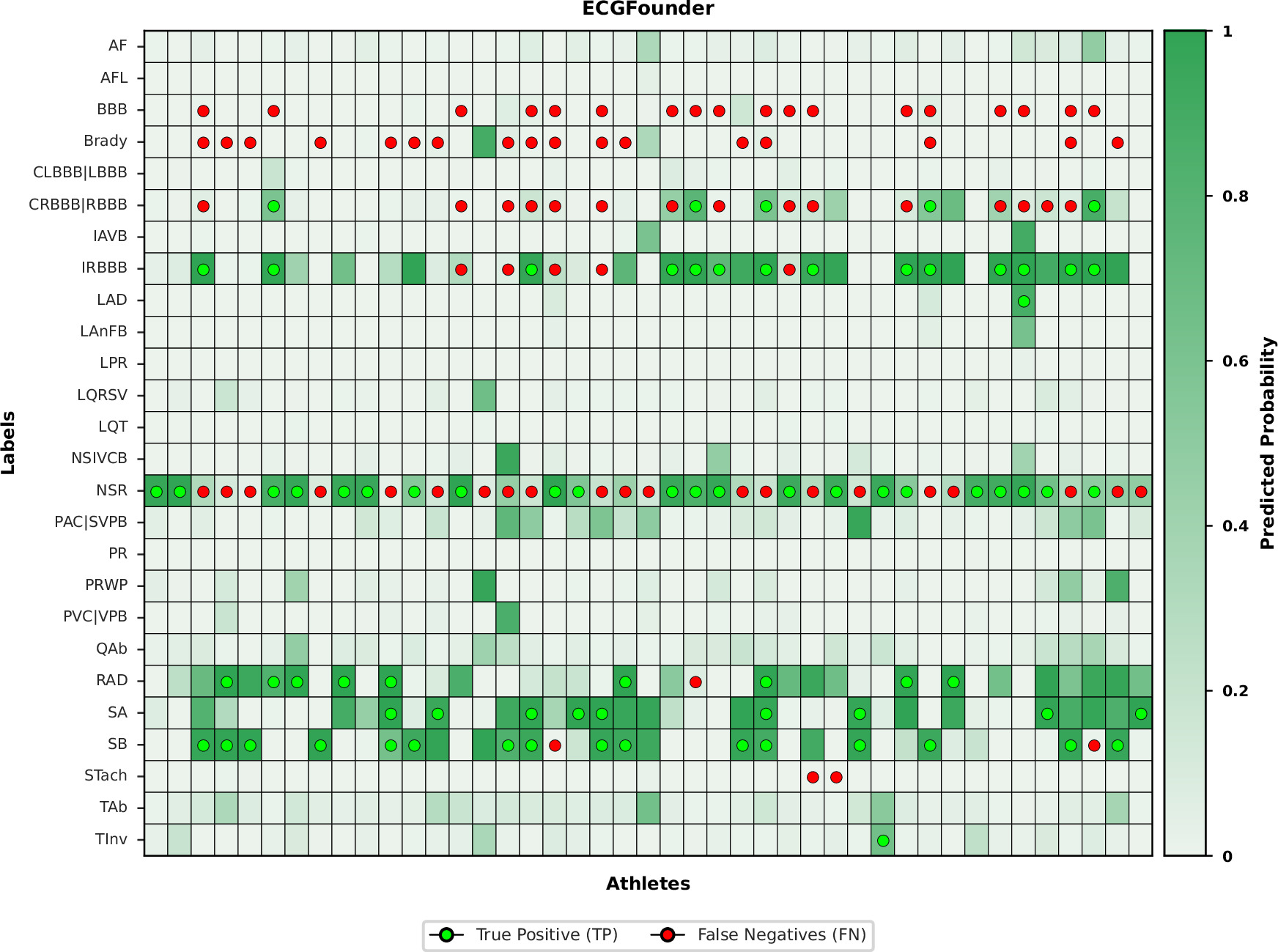
ECG foundation models for cardiovascular screening in a cohort of you…
Source: nature.com
A cardiovascular screening comprising at least a medical history, physical examination, and a standard 12-channel ECG is frequently mandatory in professional sports leagues, as vigorous physical exertion has been associated with an increased risk of fatal cardiovascular events in athletes predisposed to underlying cardiac disease, including sports-related sudden cardiac arrest (SCA) and sudden cardiac death (SCD), defined in a sports context as unexpected death during exercise or within a one-hour period following the activity. ECG screening in athletes has been shown to be the most effective strategy for screening for cardiovascular disease, being 5 times more sensitive than medical history and 10 times more sensitive than just physical examination. Evidence from Italy shows that mandatory cardiac screening for athletes reduced the annual incidence of sudden cardiac death by 90%, resulting in a rate lower than that of the general population, yet similar reductions have not been consistently replicated elsewhere, such as in Israel, where mandatory ECG screening did not lead to a significant decrease in sudden cardiac death among athletes. Economic analyses suggest screening examinations may impose a substantial economic burden, with estimated costs ranging from 10.6 to 14.4 million USD per life saved in the USA. ECG-based screening in athletes is further complicated by physiological adaptations referred to as the athlete’s heart, which can mimic pathological patterns, leading to false positives and false negatives. Recent advances in Artificial Intelligence, computational power, and large-scale ECG datasets have enabled automated ECG analysis, with Deep Learning approaches showing promise in overcoming the limitations of traditional algorithms.
SUCKS 0
0
0
Comments
This page shows all existing comments. To add a new comment, open the post in the forum.
No comments yet.