
Lightweight WDF-YOLO Detector Enhances Underwater Object Detection Ac…
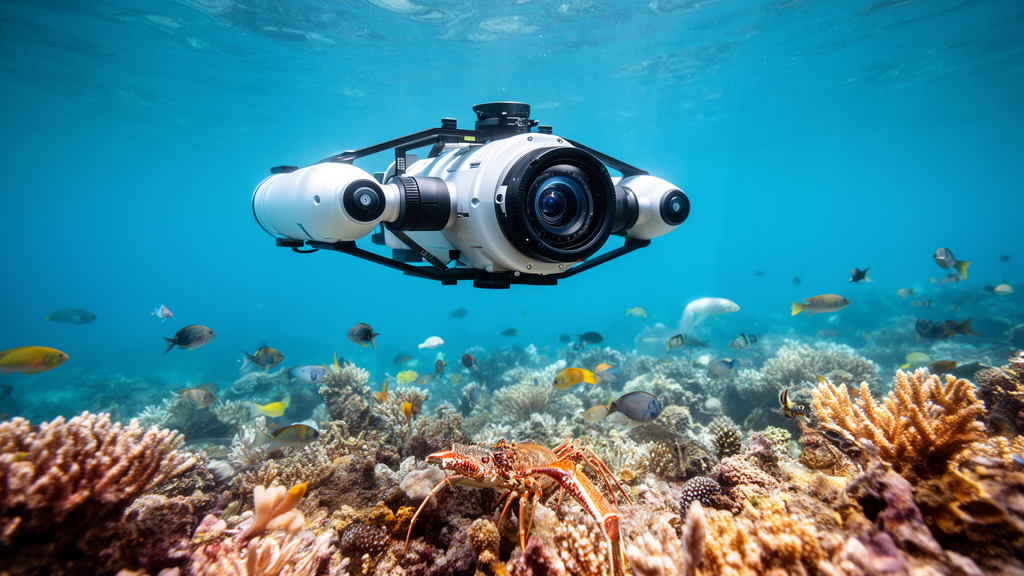
Source: bioengineer.org
Researchers Tien-Wen Sung, Yixin Chen, Chao-Yang Lee, and Qingjun Fang introduced a lightweight computer vision architecture named WDF-YOLO to address performance limitations of standard YOLOv12n object detection networks in complex aquatic environments, where light absorption, scattering, color distortion, low contrast, and non-uniform illumination hinder feature extraction. Experimental evaluations showed the baseline YOLOv12n architecture exhibits a 2.3 percentage point decline in mean average precision at an intersection-over-union threshold of 0.5 (mAP50) on the underwater URPC2021 dataset compared to preceding models of equivalent scale from YOLOv8n through YOLO11n. The authors re-engineered the detection pipeline with three core components: the Wavelet-Transform Enhanced Channel-Expansion Parallel Module (WTECEP), the Multi-Strategy Enhanced Downsampling Module (DS-MSE), and the Fusion Spatial Pyramid Pooling Residual module (FSPPR). On the URPC2021 benchmark, WDF-YOLO achieved an mAP50 of 83.5 percent, an absolute improvement of 2.4 percentage points over the baseline YOLOv12n, while reducing the parameter footprint by 23.1 percent and total floating-point operations by 1.7 percent. The work stems from structural bottlenecks in regional attention mechanisms: localized partitioning restricts long-range spatial dependency modeling, and in small-scale models such as YOLOv12n, partitioning feature
SUCKS 0
0
0
Comments
This page shows all existing comments. To add a new comment, open the post in the forum.
No comments yet.