
New AI Tool Determines the Optical Axis Direction of the Telescope
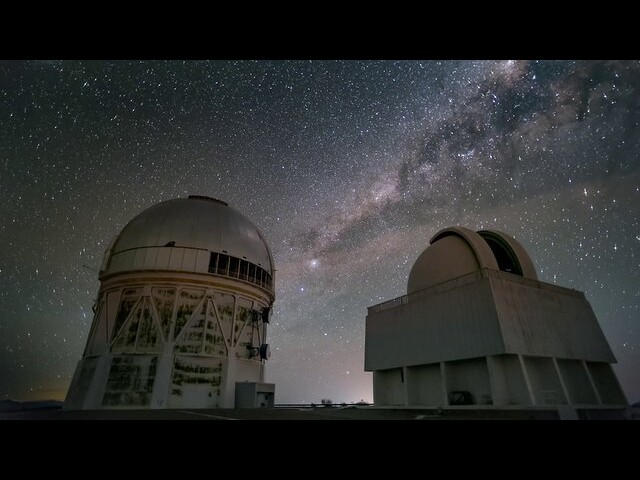
Source: azoquantum.com
Scientists from Northwestern University, the University of Chicago, and Fermilab have developed a new artificial intelligence (AI) tool that autonomously determines the optimal positioning of a telescope. The system was created at the National Science Foundation (NSF)-Simons Foundation AI Institute for the Sky (SkAI) and successfully organized observations with the 570-megapixel Dark Energy Camera (DECam), mounted on the NSF Víctor M. Blanco 4-meter Telescope at the Cerro Tololo Inter-American Observatory (CTIO) in Chile. The AI system produced an observing schedule and modified it in real time as environmental conditions changed. Project lead Alex Drlica-Wagner, a researcher at Fermilab and professor at the University of Chicago, stated that the system’s performance is currently comparable to a human’s ability, with plans to teach the computer to do better than a human. Drlica-Wagner collaborated with Aravindan Vijayaraghavan, an associate professor of computer science at Northwestern University’s McCormick School of Engineering. The on-sky deployment was carried out by Paul Chichura, Rachel Hur, and Guillermo Damke. The tool addresses the challenge of optimizing limited telescope time, as misaligned observations can produce unclear images or be overly illuminated by moonlight, delaying repeat attempts for months. Automating routine scheduling tasks aims to enhance telescopes’ ability to gather accurate data, marking a milestone toward more autonomous observatories.
SUCKS 0
0
0
Comments
This page shows all existing comments. To add a new comment, open the post in the forum.
No comments yet.