
This AI scientist can run experiments. Self-driving labs coming next
Source: news.northeastern.edu
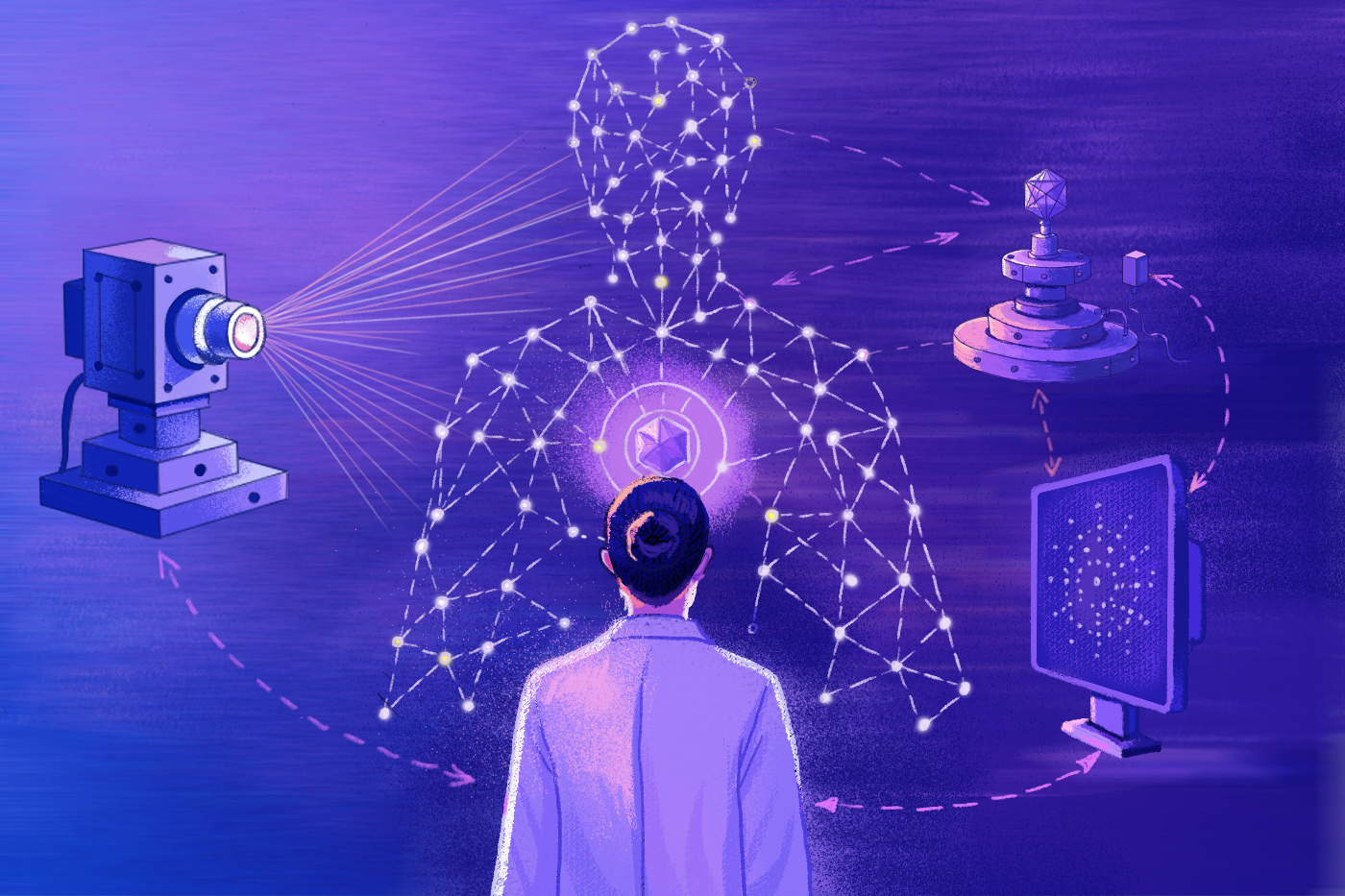
Northeastern University scientist Arun Bansil and his team presented the AI X-ray scientist in the July issue of “Nature Machine Intelligence.” The agentic model can set up experiments, run them, and adapt its approach on the fly. The development is a first step toward self-driving labs, where AI handles gruntwork while human experts focus on big questions. The project was funded by the U.S. Department of Energy (DOE) in collaboration with the Stanford Linear Accelerator Center (SLAC) National Accelerator Laboratory. Studying quantum materials involves shooting X-rays through a tiny single crystal and watching how they scatter. X-ray scattering happens in a synchrotron; the one at SLAC, the Stanford Synchrotron Radiation Lightsource (SSRL), is about 768 feet in circumference. Electrons are injected into a circular pipe and accelerated, with magnets bending their path; each direction change gives off X-rays, which are channeled into beamlines. Many facilities are oversubscribed, and some only allow one experiment at a time, driving up costs. X-ray experiments require complex preparatory work, including aligning the crystal sample, which consumes beam time and creates a bottleneck. The AI scientist is based on a large language model similar to the technology behind ChatGPT.
SUCKS 0
0
0
Comments
This page shows all existing comments. To add a new comment, open the post in the forum.
No comments yet.