
US team builds 23-inch flexible robot that links up for bigger tasks
Source: interestingengineering.com
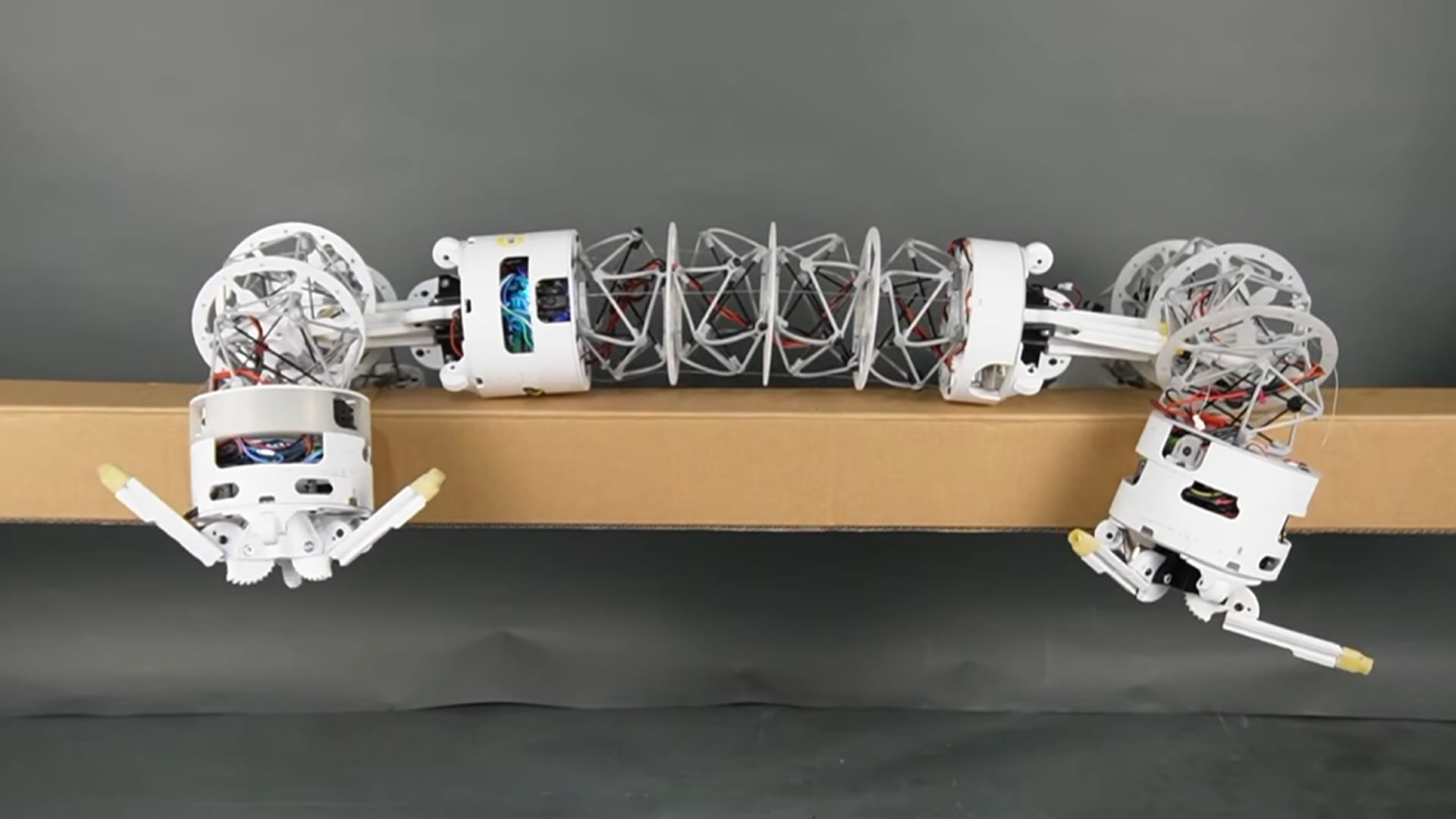
Colorado State University’s Adaptive Robotics Lab researchers have developed a new robot called the TeCoBot that can bend, grab, and combine to make an entirely new machine. The robots are roughly 23 inches (59 cm) long and are incredibly lightweight, and each one can act independently or as a module for larger constructions. Unlike conventional robots, TeCoBot does not have a rigid arm with elbows and joints; instead, its body is a flexible structure that can change shape continuously, allowing each robot to shorten, lengthen, and bend in different directions, grip objects at either end, and crawl, roll, climb, and connect to other TeCoBots. The researchers called this task-adaptive morphology: the ability to change a machine’s physical arrangement to suit a particular task. A single robot might be useful for picking up an object, but connecting three or four of them together lets them form a ring, a walker, or a longer manipulator. The design is based on tensegrity, or “tensional integrity,” with carbon-fiber rods incorporated into an elastic lattice and three motor-driven cables running lengthwise through the body; varying the cable tensions lets the robot bend without conventional hinges or rotational joints, and its compliant body can absorb impacts and accommodate uneven surfaces. The combining ability could prove valuable for things like search and rescue. While the researchers have demonstrated autonomous docking, most of the robots' movements and cooperative tasks still require human control.
SUCKS 0
0
0
Comments
This page shows all existing comments. To add a new comment, open the post in the forum.
No comments yet.