
First AI-Driven Telescope Goes Stargazing | News | Northwestern Engin…
Source: mccormick.northwestern.edu
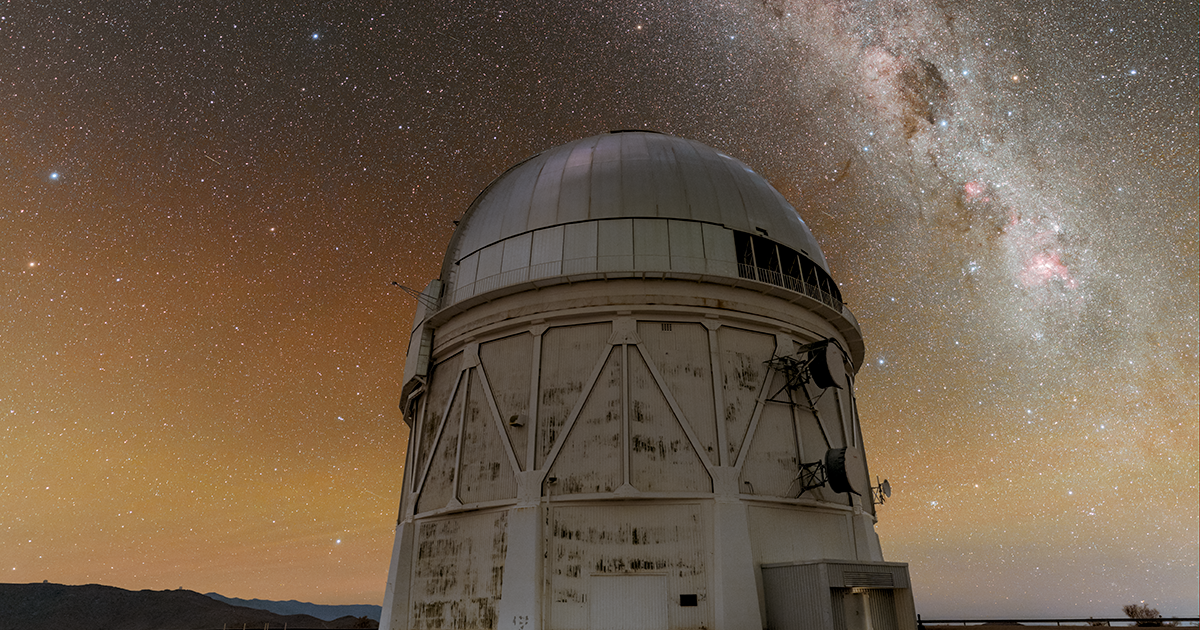
Scientists from Northwestern Engineering, the University of Chicago, and Fermilab have developed a new AI tool that automatically determines where a telescope should point, adapting its plan in real time as environmental conditions change. The system was developed within the National Science Foundation (NSF)-Simons Foundation AI Institute for the Sky (SkAI) and successfully used to schedule observations with the 570-megapixel US Department of Energy (DOE)-fabricated Dark Energy Camera (DECam), mounted on the NSF Víctor M. Blanco 4-meter Telescope at Cerro Tololo Inter-American Observatory (CTIO) in Chile. By automating routine scheduling decisions, the innovation aims to help telescopes collect better data and use observing time more efficiently. UChicago’s Alex Drlica-Wagner, who co-led the project with Aravindan Vijayaraghavan, an associate professor of computer science at the McCormick School of Engineering, called it an important milestone toward more autonomous observatories. He noted that the team set up all the infrastructure needed to deploy the self-driving telescope on a national observatory and that its current performance is comparable to a human’s ability, with plans to teach the computer to outperform humans. Paul Chichura, SkAI postdoctoral associate; Rachel Hur, a PhD student at UChicago; and Guillermo Damke, an associate scientist at NSF’s NOIRLab, performed the on-sky deployment at the Blanco telescope.
SUCKS 0
0
0
Comments
This page shows all existing comments. To add a new comment, open the post in the forum.
No comments yet.