
After GPT-6, Do Autonomous Driving Companies Have Only One Path Left?
Source: autonews.gasgoo.com
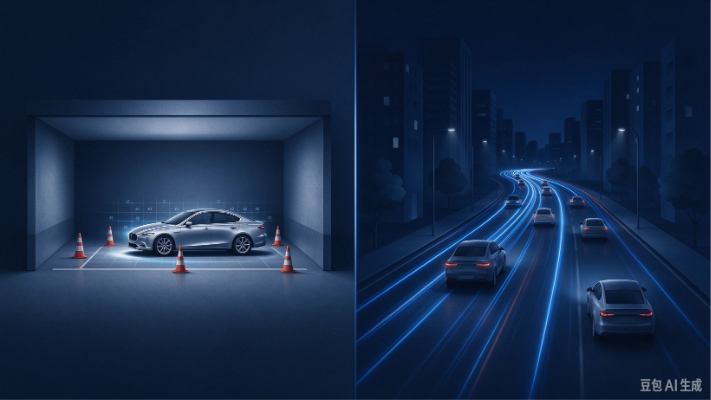
DeepRoute.ai CEO Zhou Guang reiterated in an interview that autonomous driving companies must become large-model companies or have "no chance," a prediction he first made in 2024 when most listeners were skeptical. He said that after GPT-6, "everyone should realize: it's happening," citing a recent real-car test by GPT-6 Astra that for the first time offered visible proof a general-purpose large model can control a physical vehicle through driving tasks. Zhou puts the window at two to three years, after which companies failing to pivot to the large-model paradigm risk being priced out. In September, independent evaluator DrivingBench ran a public test tasking four general-purpose large models — GPT-6 Astra, Claude Fable 5.1, Grok 4.6, and GPT-5.6 Sol — with directly controlling a 2022 Toyota Corolla via tool interfaces on a closed course spanning 134.7 meters. GPT-6 Astra completed the course on its second attempt in 5 minutes and 22 seconds, averaging roughly 1.5 km/h, while the other models logged completion rates between 6% and 45%. DrivingBench conceded the tasks were "all very simple." In the first half of 2026, Huawei held 18.1% of China's high-tier autonomous driving market, Tesla 13.2%, and Momenta 12.2%, with more than a dozen other players splitting the rest.
SUCKS 0
0
0
Comments
This page shows all existing comments. To add a new comment, open the post in the forum.
No comments yet.