
Deep, evolving environments for computer-use agents
Source: microsoft.com
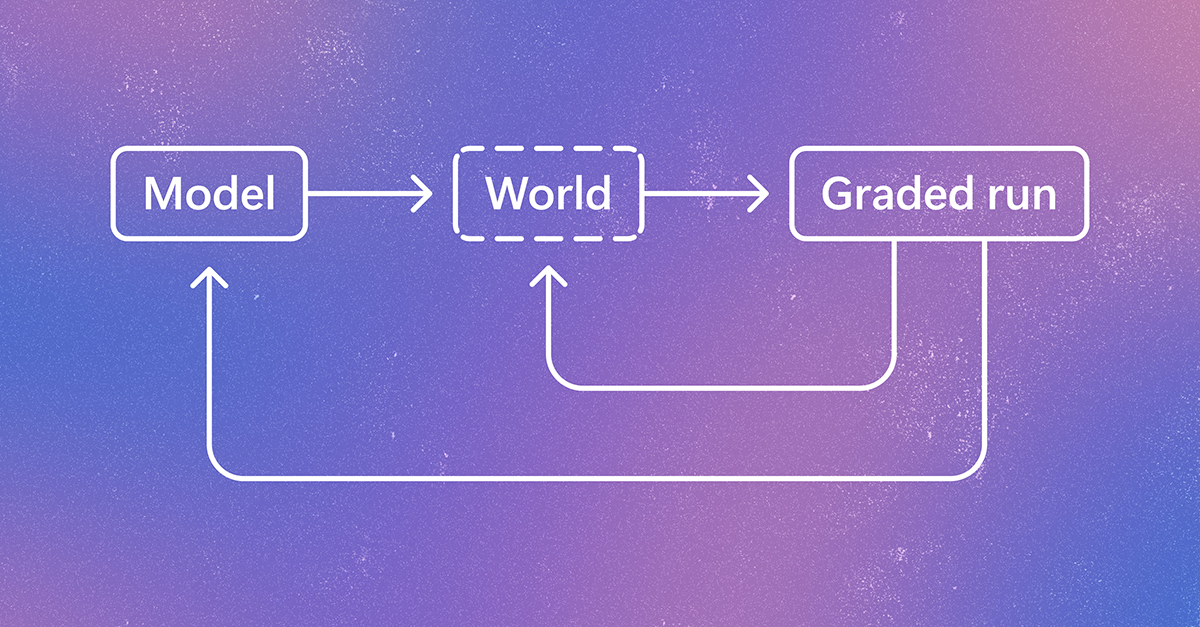
Microsoft Research built twelve training worlds for computer-use agents—ten deep domain worlds and two capability worlds—each drilling a single control rendered in many forms, such as date pickers and nested filters. These worlds reproduce an application’s real behavior, come seeded with realistic data, and keep state coherent across screens and users. Trained on all twelve, a 9B model nearly doubles its base score from 36.5% to 67.1%, coming within fourteen points of GPT-5.4. The experiment yielded several lessons: high simulation fidelity is a must-have, as shallow worlds hurt the agent; trained on shallow and deep builds of the same sites, the model regressed on the shallow ones but improved on the deep ones. Agents often struggle with challenging UI elements like date pickers and nested filters, but drilling those controls in varied forms taught the model to operate them in domains it never saw in training. Co-evolving the model, the world, and the verifier improves all of them, with the world growing more correct and tasks harder as the model climbs. Reinforcement learning against the worlds, using the grounded verifier as the reward, lifts held-out performance and teaches the agent to reach the goal in fewer steps. Microsoft is releasing four of the worlds with their code, data, and grounded graders to support research on high-fidelity computer-use worlds.
SUCKS 0
0
0
Comments
This page shows all existing comments. To add a new comment, open the post in the forum.
No comments yet.