
From Skin to Robots, Flexible Infrared Sensors Are Finding New Places…
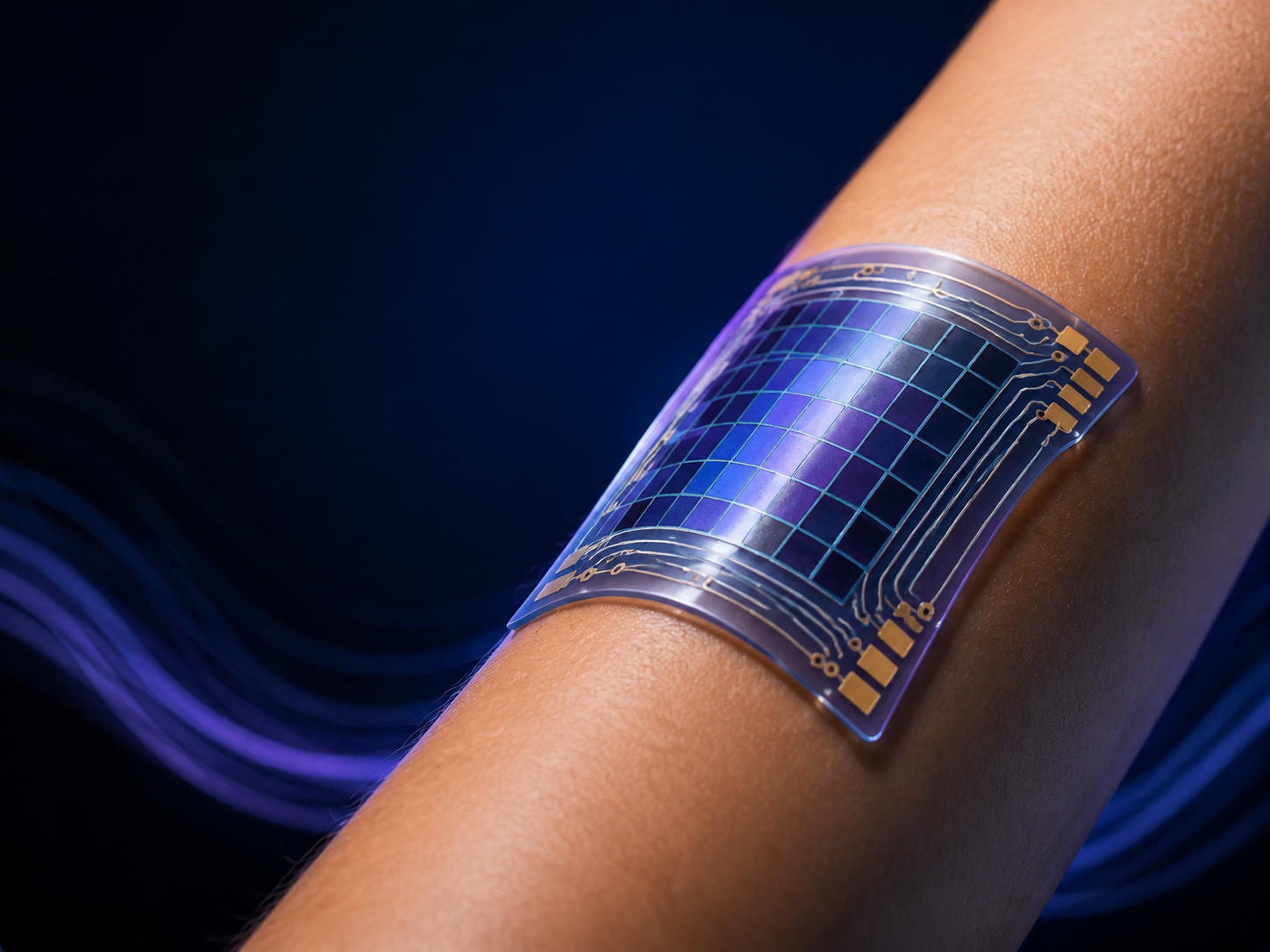
Flexible near-infrared (NIR) and short-wave infrared (SWIR) image sensors are advancing beyond rigid cameras for applications such as skin-mounted health monitors and robotic vision, according to a review published as an 'Article in Press' in the journal npj Flexible Electronics. The review examines photoactive materials, device architectures, readout technologies, and emerging applications, highlighting organic semiconductors, colloidal quantum dots, perovskites, two-dimensional materials, and hybrid systems as key platforms. It identifies system-level flexibility, environmental stability, standardized characterization, and integration with flexible electronics as critical challenges for practical deployment. Conventional sensors rely on rigid semiconductor platforms; while silicon offers efficient visible-light imaging, it has limited sensitivity at longer wavelengths. Materials like indium gallium arsenide (InGaAs), mercury cadmium telluride (HgCdTe), lead sulfide (PbS), and germanium-on-silicon (Ge-on-Si) extend detection into the SWIR range but often require rigid substrates, epitaxial growth, and cooling, increasing complexity and cost. NIR generally covers 700 nm–1.0 μm, while SWIR extends from approximately 1.0–1.7 μm. The NIR–SWIR region contains absorption features associated with water, lipids, hydrocarbons, and other molecular components. Flexible sensors, with their thin and conformable structures, maintain close contact with curved and moving surfaces, improving optical coupling and reducing motion artifacts in wearable and contact-based imaging. The review addresses how material
SUCKS 0
0
0
Comments
This page shows all existing comments. To add a new comment, open the post in the forum.
No comments yet.