
Generative and Foundation-Based Artificial Intelligence in Medical Im…
Source: cureus.com
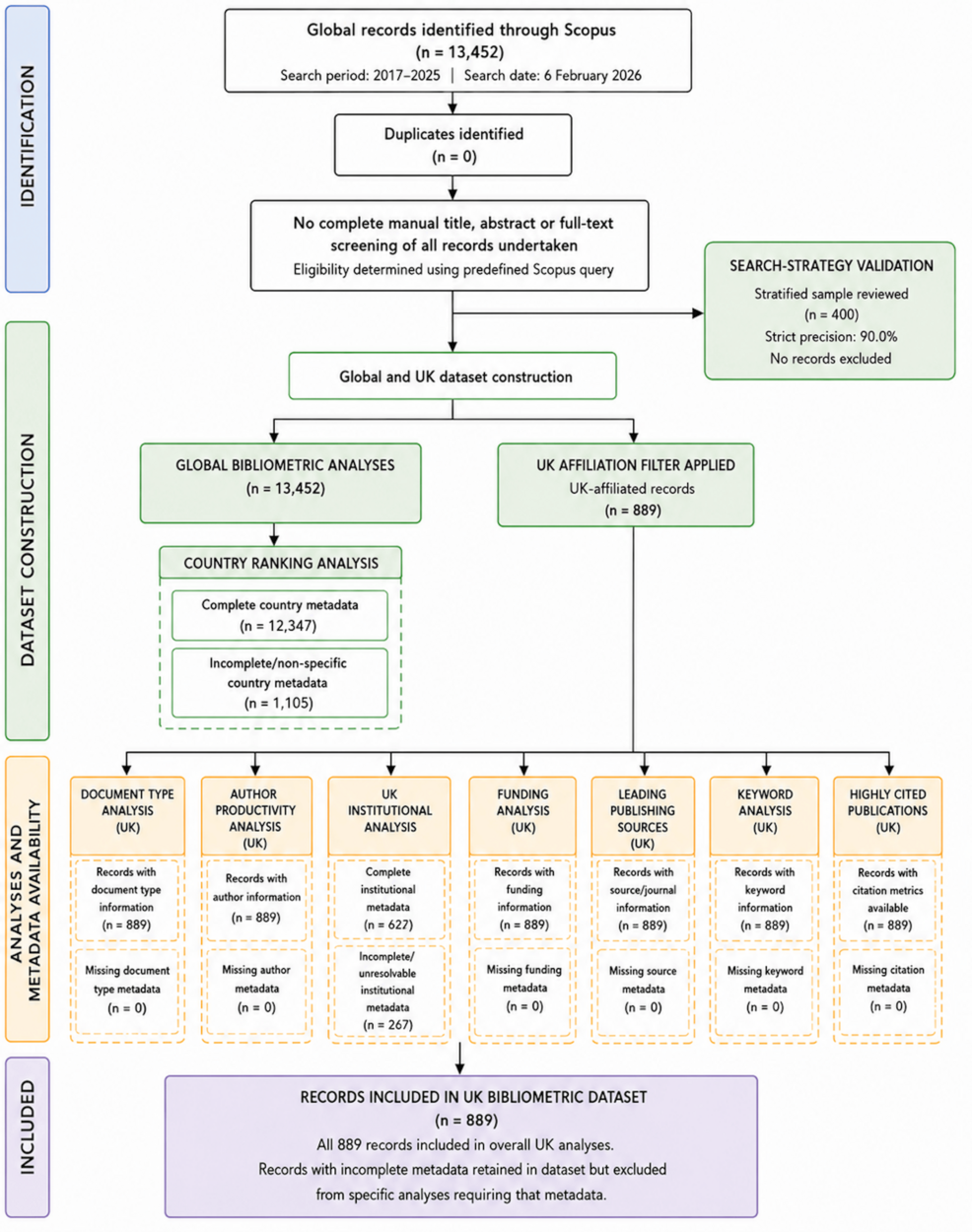
A bibliometric analysis examined global and United Kingdom research on generative and foundation-based artificial intelligence in medical imaging from 2017 to 2025. The study notes that AI in medical imaging has explored applications in image acquisition, reconstruction, segmentation, synthesis, triage, and interpretation. Generative models, including generative adversarial networks, diffusion models, and variational autoencoders, are designed to generate or transform data, while foundation models are large-scale systems pretrained on broad datasets and adapted to multiple downstream tasks. These methods have been applied to accelerated magnetic resonance imaging reconstruction, image enhancement, data augmentation, anomaly detection, multimodal image synthesis, image interpretation, and report generation. The rapid growth of this research has produced a large, heterogeneous body of literature spanning clinical journals, engineering venues, and conference proceedings. The analysis aims to understand how research activity is distributed, which countries and institutions contribute most substantially, how collaborative networks are structured, and which thematic areas dominate scholarly output. Such insights are considered essential for informing research strategy, funding allocation, and translational planning. Bibliometric analysis provides a systematic framework for quantitatively assessing research output, citation impact, collaboration patterns, and thematic evolution within large scientific corpora, enabling identification of influential publications, emerging research topics, and structural relationships among authors and institutions.
SUCKS 0
0
0
Comments
This page shows all existing comments. To add a new comment, open the post in the forum.
No comments yet.