
Why ERP Leaders Need to Understand Data Lakehouses Before Scaling AI …
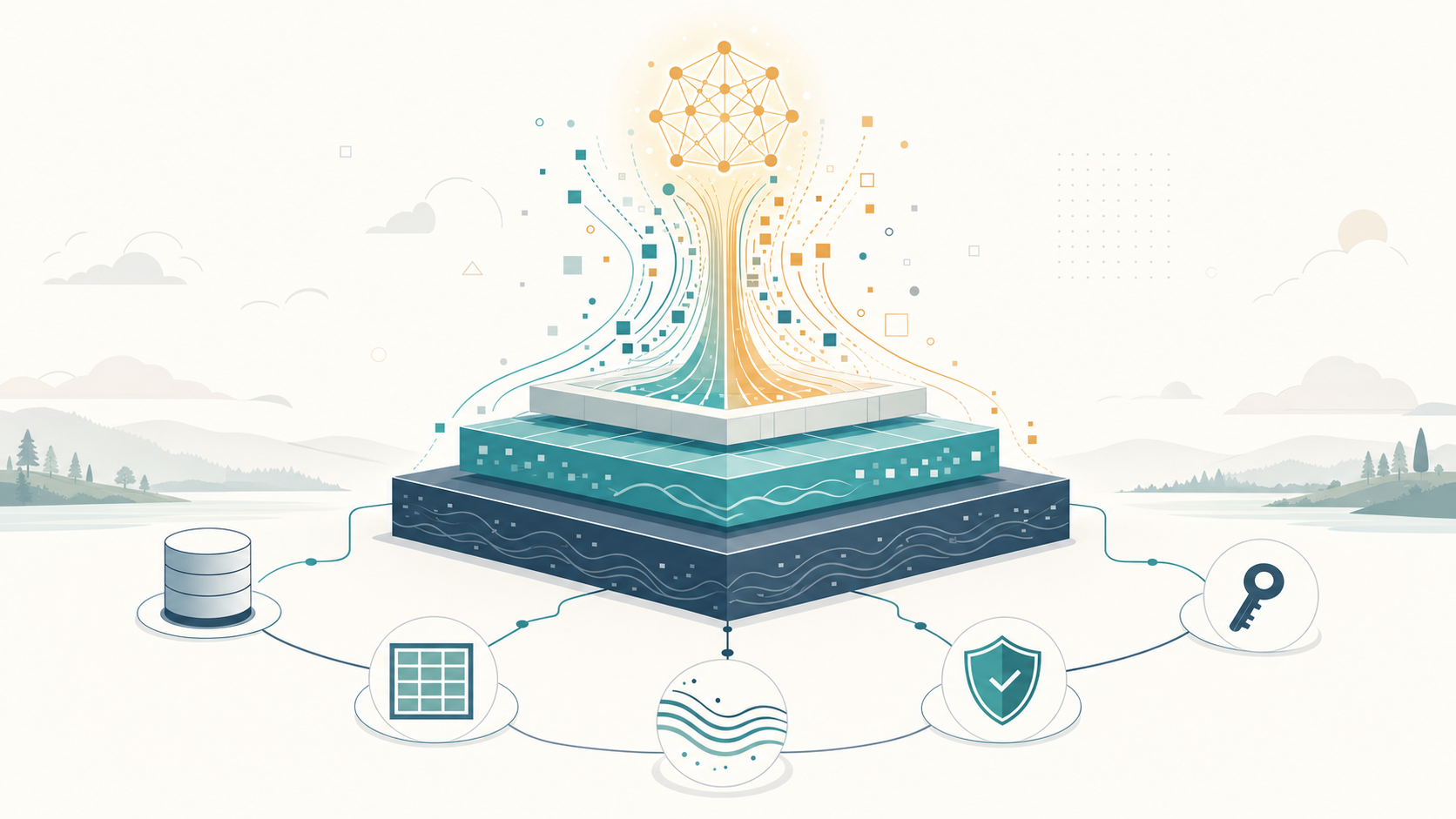
A data lakehouse bridges the gap between data lakes and data warehouses, giving enterprise AI agents a governed, cross-system data foundation without replacing the ERP, which remains the system of record for transactions, financial controls, and operational workflows. The semantic layer—the business context defining metrics, master data rules, and finance-grade definitions—is the hardest part of AI-ready data architecture; ERP leaders who fail to govern how data is modeled before it reaches AI agents risk producing plausible but inaccurate business insights. Scaling agentic AI across ERP workflows demands proactive lakehouse governance—including defined serving layers, vector indexes, identity controls, and cost guardrails—so AI agents receive the right slice of governed data rather than unchecked access to all enterprise transactions. A June 24 CIO.com feature argues that lakehouses are becoming foundations for enterprise AI because they combine the flexible storage of a data lake with the reliability, structure, security, and governance of a traditional data warehouse. The lakehouse does not replace ERP but becomes the governed data foundation where information from ERP and adjacent systems can be prepared, joined, secured, and understood by analytics and AI applications.
SUCKS 0
0
0
Comments
This page shows all existing comments. To add a new comment, open the post in the forum.
No comments yet.