
Materials AI Is Advancing Fast, but One Big Piece Is Still Missing
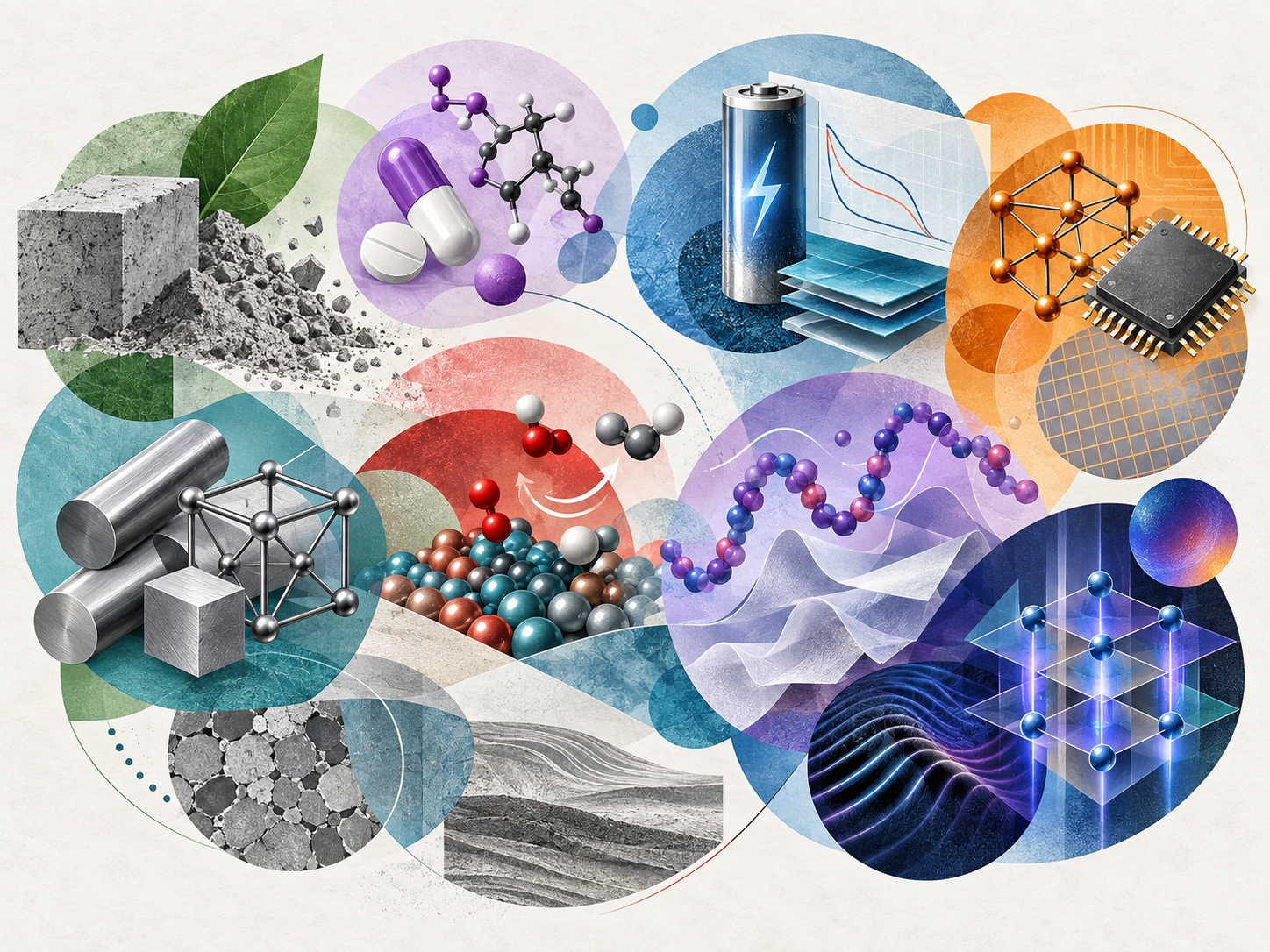
A survey of the materials AI landscape, based on the paper "Domain-Informed AI Multimodal Foundation Model for Materials Science" posted on the ChemRxiv preprint server, examined the shift from narrow, task-specific machine learning models to broader foundation models reusable across materials problems. Developing a genuinely new material from discovery to market has historically taken 15 to 20 years under traditional trial-and-error development, and demand for materials in clean energy, sustainable construction, and advanced electronics has increased the need for faster research methods. Many existing ML approaches process material data types separately, making it hard to capture relationships among physical properties, which has encouraged exploration of multi-modal models integrating diverse data sources and scientific knowledge. Researchers conducted a bibliographic analysis of 557 records from the Web of Science Core Collection supplemented by an open literature search, identifying 58 new materials-science foundation models and 45 further publications discussing them, with publication activity rising steeply from 2022 to mid-2026. Inorganic crystals and atomistic materials accounted for 41 of the 58 models. The study examined seven data modalities, including text, audio, video, images, graphs, tabular data, and time-series signals, and proposed a structure built around four core requirements for materials foundation models.
SUCKS 0
0
0
Comments
This page shows all existing comments. To add a new comment, open the post in the forum.
No comments yet.