
Cross-Dataset Farm Benchmarking Exposes Severe AI Vision Flaws in Weed
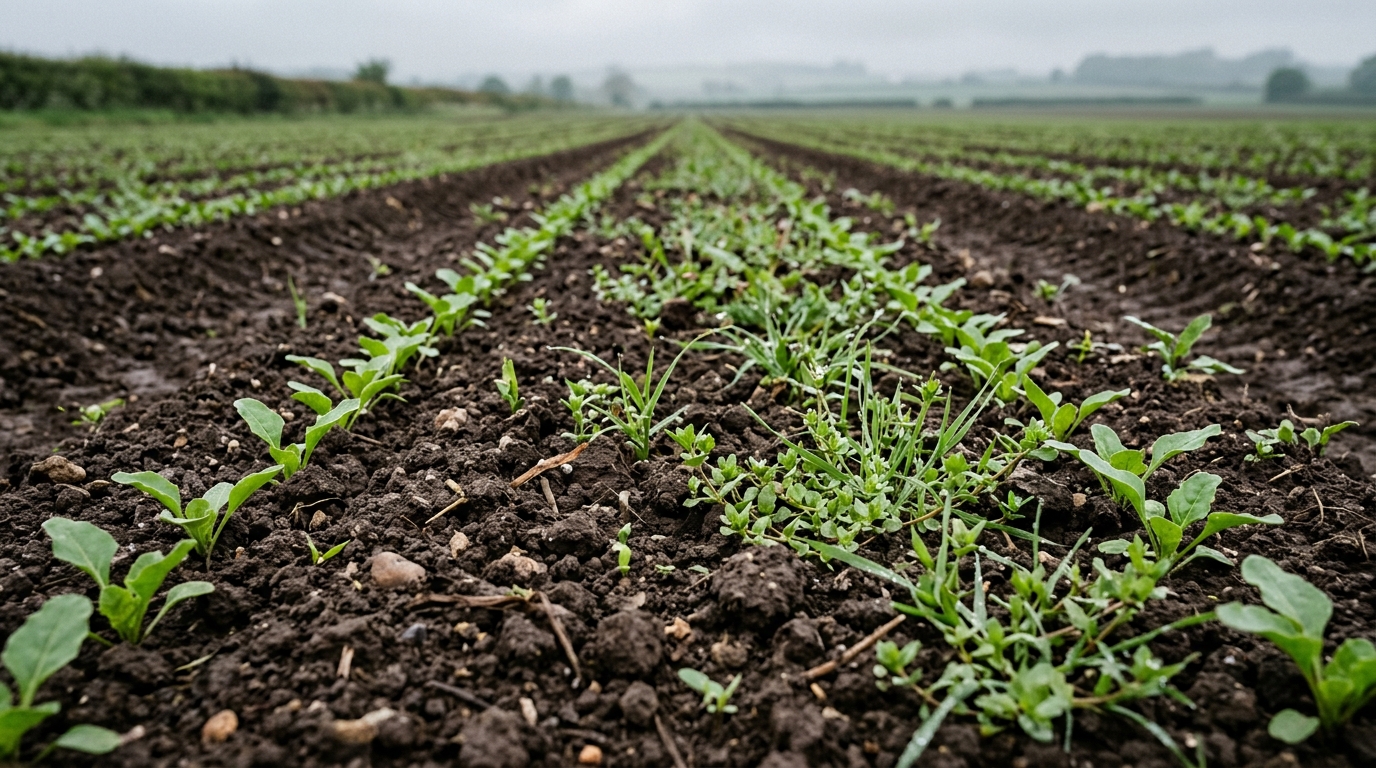
Source: bioengineer.org
A benchmark study published in Information Processing in Agriculture by researchers Shuhao Liu, Zhuo Chen, Jie Liu, Zhi Ling, and Yu Yan found that computer vision architectures with superior accuracy on isolated agricultural benchmarks often suffer severe performance degradation under real-world dataset shift and sensory degradation. Because visual mistakes in farming carry asymmetric operational costs—a false negative lets noxious weeds escape control while a false positive directs lethal spray or mechanical tools into crop foliage—the team conducted a pre-deployment reliability assessment evaluating standard convolutional and vision transformer models across paired image archives, controlled synthetic noise, confidence calibration diagnostics, and external field datasets. The researchers created a traceable evaluation pipeline using two open-source visual archives, CropAndWeed and PhenoBench, mapping their conflicting botanical taxonomies and annotation guidelines into a harmonized label space spanning background soil, cultivated crop tissue, and unwanted weed vegetation. Models were tested on weed-presence classification, spatial bounding-box detection, and dense pixel-wise semantic segmentation. Classification models included ResNet50, ConvNeXtV2-Tiny, DINOv2-S, EfficientNetV2-S, and Swin-T, trained within PyTorch and timm; detection used YOLO-family architectures and RT-DETR-L; segmentation included U-Net, DeepLabV3+, SegFormer-B0, UPerNet-Swin-T, and Mask2Former-Swin-T. Every primary model configuration underwent a strict 300-epoch training schedule, with final model selection
SUCKS 0
0
0
Comments
This page shows all existing comments. To add a new comment, open the post in the forum.
No comments yet.