
Deep learning model predicts wind-induced bridge vibrations from five…
Source: bioengineer.org
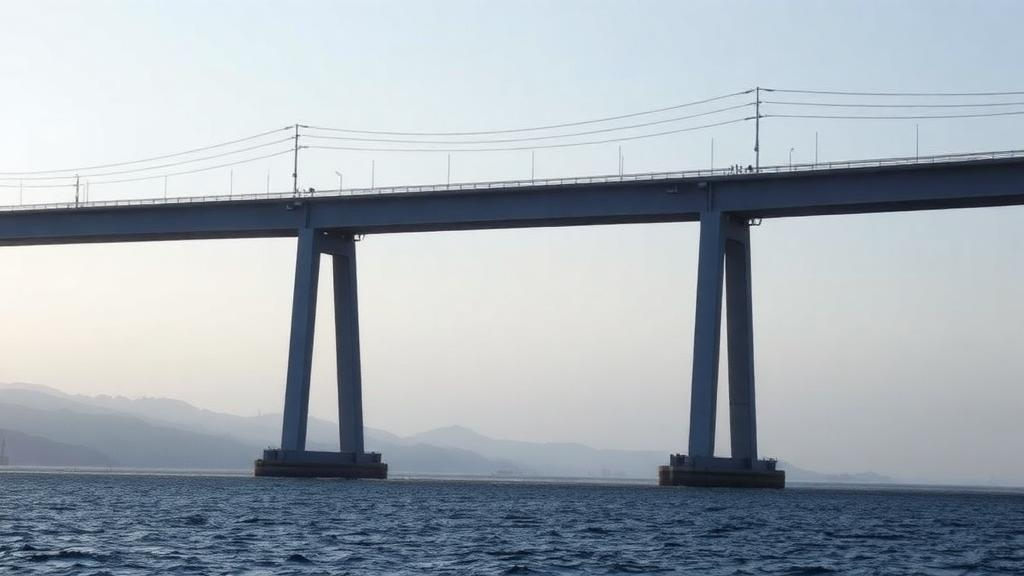
Engineers have developed a deep learning model, CA-Buffeting Net, that predicts how long-span bridges sway in strong winds using five years of real monitoring data from the Xihoumen Bridge in Zhejiang Province, China, a suspension bridge with a main span of 1,650 metres connecting the Zhoushan archipelago to the mainland, rather than wind tunnel experiments or computer simulations. Published in Advances in Bridge Engineering, the work reports that the model reduces the mean squared error of predictions by 29.7 percent and the mean absolute error by 20.2 percent compared with an existing baseline model, while improving the shape fidelity of predicted vibration spectra by 1.2 percentage points in cosine similarity. The researchers tackled buffeting, the random forced vibration of a bridge caused by atmospheric turbulence, the most common and persistent form of wind-induced vibration over a bridge's service life, which in severe episodes can accelerate structural fatigue damage, disrupt traffic and, in extreme cases, threaten structural safety. The bridge is equipped with six ultrasonic anemometers and twelve single-axis servo accelerometers; because the mid-span anemometer is affected by the main cable, the study used wind data only from the quarter-span and three-quarter-span sections. The team applied a strong-wind criterion, excluding 10-minute samples with mean wind speeds below 11 metres per second, and repaired missing or erroneous records by interpolation.
SUCKS 0
0
0
Comments
This page shows all existing comments. To add a new comment, open the post in the forum.
No comments yet.