
Deep Learning Model Achieves 0.9915 R² in Mining Drill-String Forecas…
Source: azomining.com
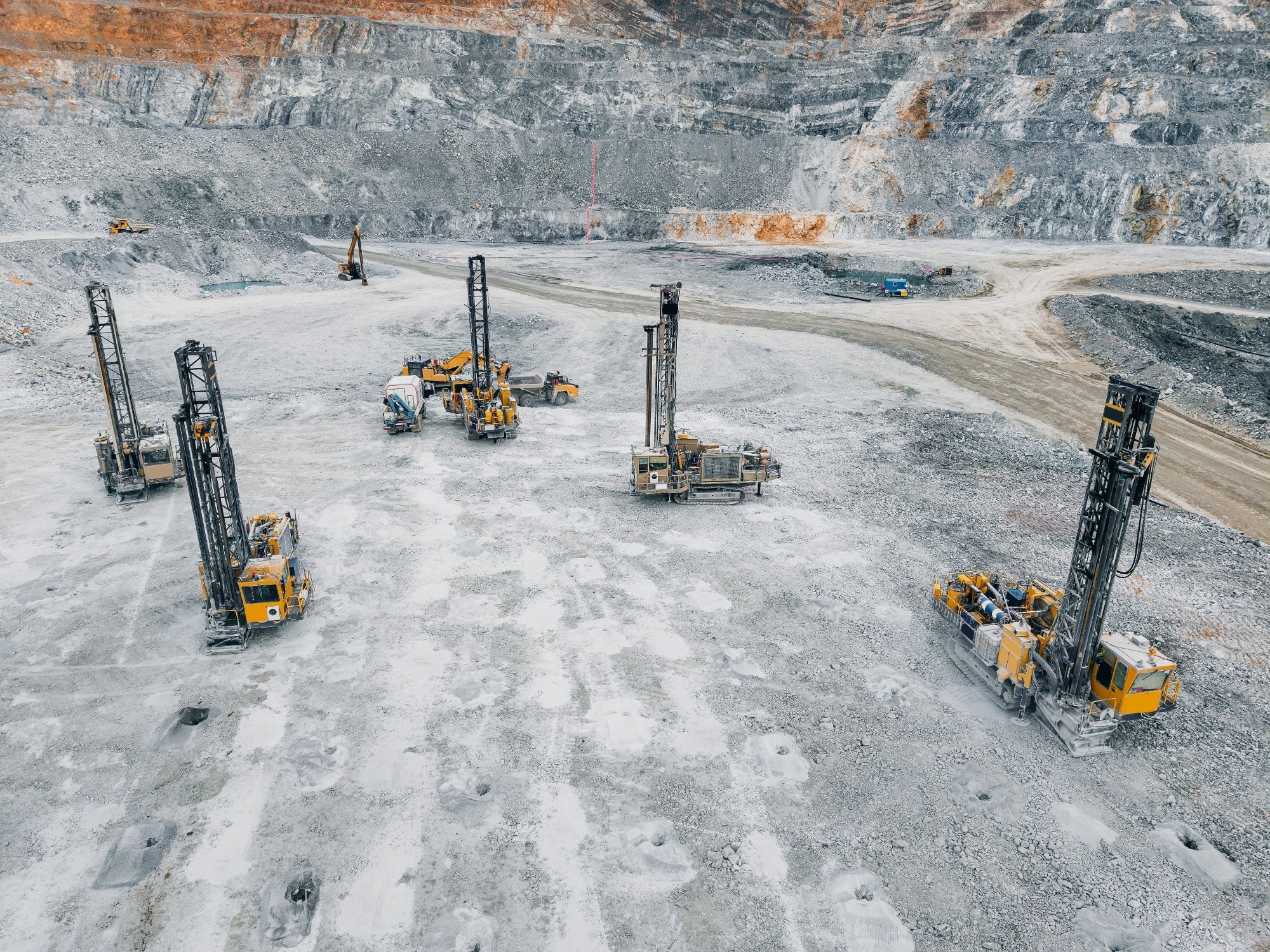
Researchers have developed a forecasting network combining multiscale dilated causal convolution, temporal convolutional networks, and an attention mechanism to predict drill-string sticking behavior in mining drilling systems, with findings published in Sensors offering a potential foundation for more reliable monitoring and risk assessment in underground mining operations. Mining drilling systems operate under complex and changing geological conditions, as variations in coal and rock formations affect drilling resistance, vibration, torque, and feed pressure; as drilling progresses, cuttings accumulate around the drill string and their removal becomes difficult, increasing pressure on the drill pipe and raising the risk of sticking, which prevents the drilling tool from moving or rotating freely. Conventional monitoring methods primarily detect existing abnormalities rather than predict future changes, and existing prediction models struggle to capture the complex temporal relationships characterizing drilling operations. The researchers developed a model (MsTCN-SE) integrating multiscale dilated causal convolution (MDCC), a temporal convolutional network (TCN), and squeeze-and-excitation (SE) attention to analyze complex drilling signals, evaluating it using an instrumented drilling platform that simulated coal-rock drilling conditions, with four sensors recording feed pressure, torque, drilling depth, and vibration along three directions. The researchers used the sticking factor as the prediction target, derived from a global T2 monitoring statistic that combines sensor-based drilling features via hierarchical fusion.
SUCKS 0
0
0
Comments
This page shows all existing comments. To add a new comment, open the post in the forum.
No comments yet.