
Experiments have shown that humans are prone to betraying AI even whe…
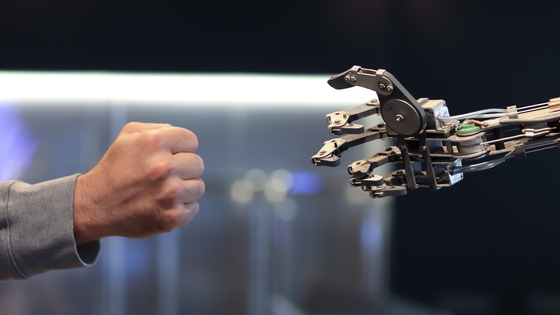
Source: gigazine.net
A study by researchers at the University of Jaume I in Spain found that people tend to prioritize their own gain over cooperation when they know their opponent is a program, even if they expect the program to cooperate. This behavior remained unchanged even when the artificial agent's profits went to real humans. The team conducted an experiment using the Prisoner's Dilemma, where two participants chose to 'cooperate' or 'not cooperate.' If both cooperated, they received a stable benefit, but if only one cooperated, the non-cooperating participant received the greatest benefit. A total of 346 Spanish university students participated, divided into two groups: one playing against other humans and one against artificial intelligence agents. These agents were not generative AI but computer programs that probabilistically determined choices based on past human behavior. The experiment was conducted in April 2022, before generative AI became widespread, and participants were not very familiar with it. The artificial agent was designed to probabilistically replicate human behavior based on data from human games. Since the agent's profits were given to other participants in the same laboratory, not cooperating indirectly reduced real humans' profits. Participants first played 10 one-time rounds against different opponents, then three sets of 10 rounds against the same opponent, with each round preceded by a response indicating whether they expected cooperation. Those facing an artificial agent were clearly informed of this and told it mimicked human choices based on experimental data, with its profits shared with other participants.
SUCKS 0
0
0
Comments
This page shows all existing comments. To add a new comment, open the post in the forum.
No comments yet.