
Clarence Thomas explains why the Commerce Clause cannot justify feder…
Source: reason.com
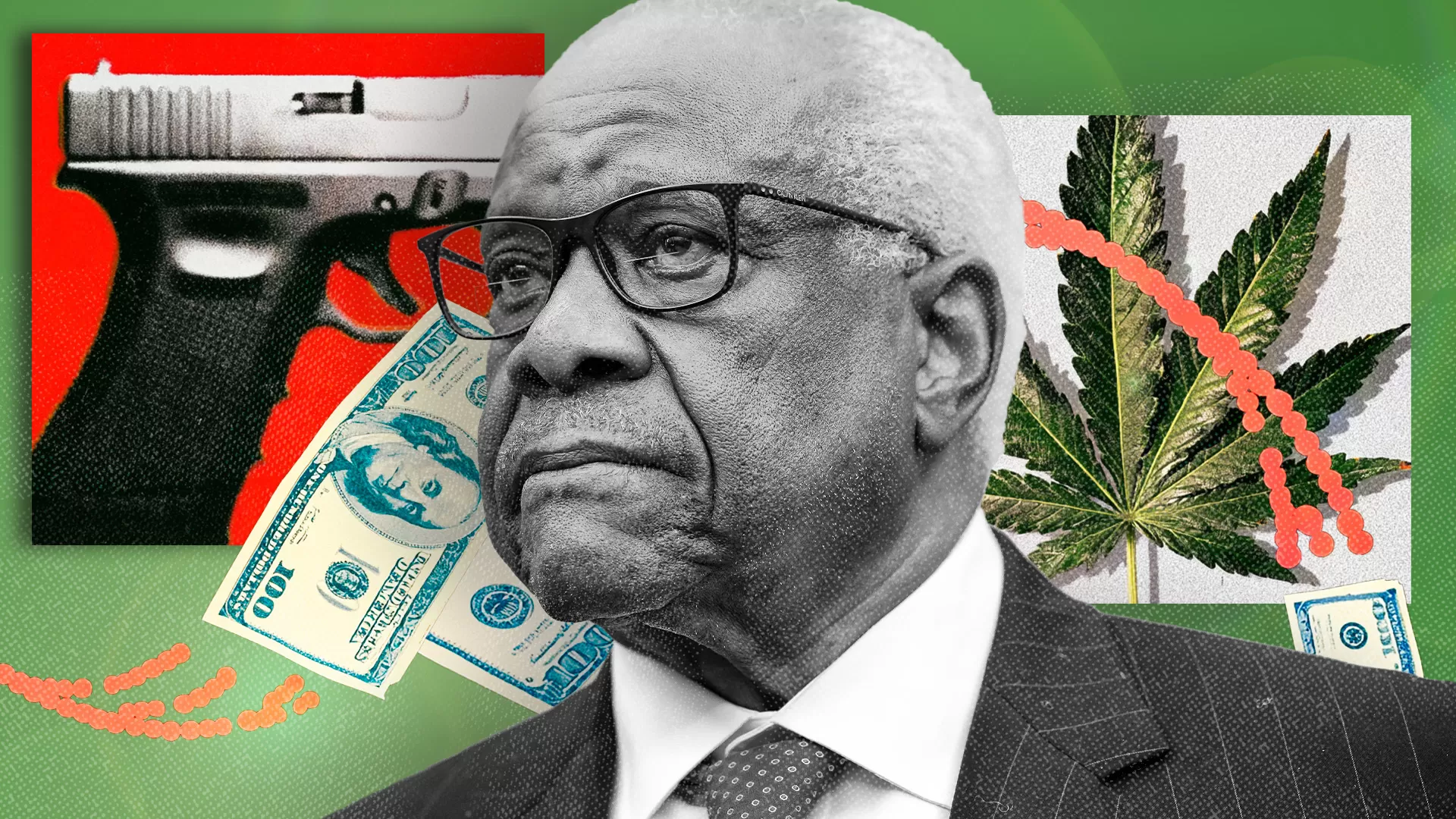
In United States v. Hemani, the Supreme Court unanimously ruled that the government may not strip people of their Second Amendment rights or prosecute them for illegal gun possession simply because they are marijuana users. Justice Clarence Thomas joined his colleagues in upholding the Second Amendment rights of cannabis consumers threatened with prosecution under 18 USC 922(g)(3), which makes it a felony for an "unlawful user" of "any controlled substance" to possess a firearm. Thomas argued that the law exceeds the federal government's power to regulate interstate commerce, noting that Section 922(g) applies to gun possession "in or affecting commerce" and relies on a highly elastic interpretation of the Commerce Clause. Thomas' objection also applies to other provisions of the same law, including Section 922(g)(1), which permanently disarms people convicted of crimes punishable by more than a year of incarceration, and Section 922(g)(4), which covers people subjected to involuntary psychiatric treatment. Thomas illustrated that prosecutors would have had to prove that Ali Hemani's gun "had previously traveled in interstate commerce," which was easily met since Hemani owned a Glock 19 pistol manufactured either in Austria or Georgia. Prosecutors "alleged only that the firearm that he possessed had 'been shipped and transported in interstate and foreign commerce' in the past—even though Hemani was indicted for possessing it in his home in Texas."
SUCKS 0
0
0
Comments
This page shows all existing comments. To add a new comment, open the post in the forum.
No comments yet.