
How to Run Isolated Tenant Kubernetes Clusters on Shared GPU Infrastr…
Source: developer.nvidia.com
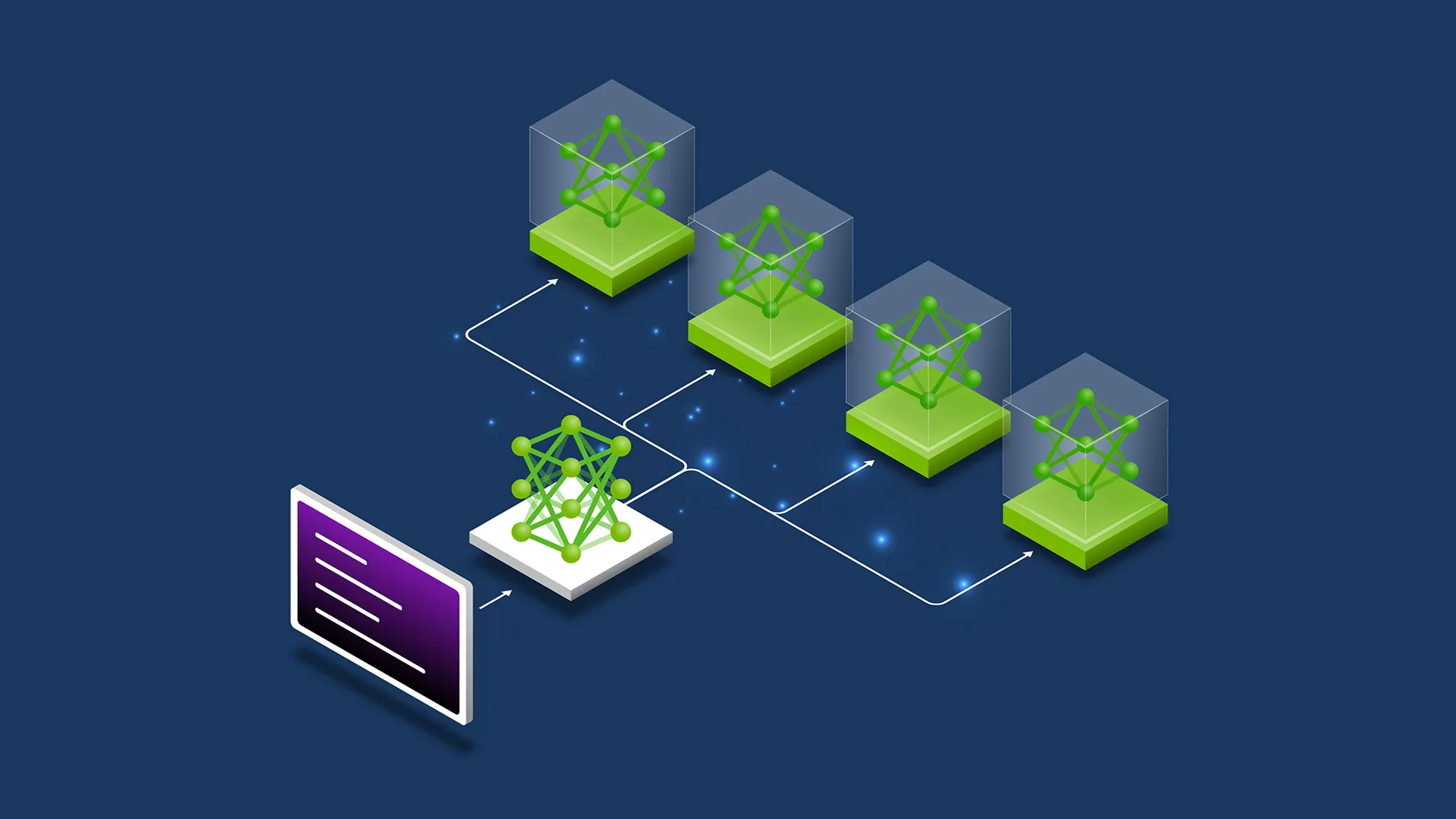
Running a dedicated Kubernetes cluster per team often provides more isolation than needed, while sharing one cluster increases coordination costs as teams grow, leading to challenges like conflicting CRD versions, overlapping RBAC, and difficulty carving GPU capacity into team-level budgets. A pattern preserves team autonomy without splitting hardware by using a single control plane cluster with a GPU pool, GPU sharing with per-team quotas, and an isolated Kubernetes control plane per team, including an API server, controller, data store, syncer, and scheduler. This is achieved using two open source tools: KAI Scheduler and vCluster. The tutorial uses a cluster with one NVIDIA L40S GPU and three teams sharing fractions of it, though the process works the same on larger clusters with hundreds of GPU nodes and dozens of teams. KAI Scheduler is a topology-aware Kubernetes scheduler for optimizing GPU resource allocation for AI workloads, designed for large-scale clusters with thousands of nodes; it runs alongside the default kube-scheduler, handling pods with schedulerName: kai-scheduler. vCluster provisions fully isolated tenant clusters, giving each tenant its own API server, CRDs, and RBAC, indistinguishable from a dedicated cluster while sharing underlying nodes and hardware. The vCluster shared-nodes model is used, so teams share the GPU node while each gets its own isolated control plane, suitable for trusted internal teams.
SUCKS 0
0
0
Comments
This page shows all existing comments. To add a new comment, open the post in the forum.
No comments yet.