
Huawei Touts 'AI Scientists' That Cut Drug Development Costs 25%
Source: en.sedaily.com
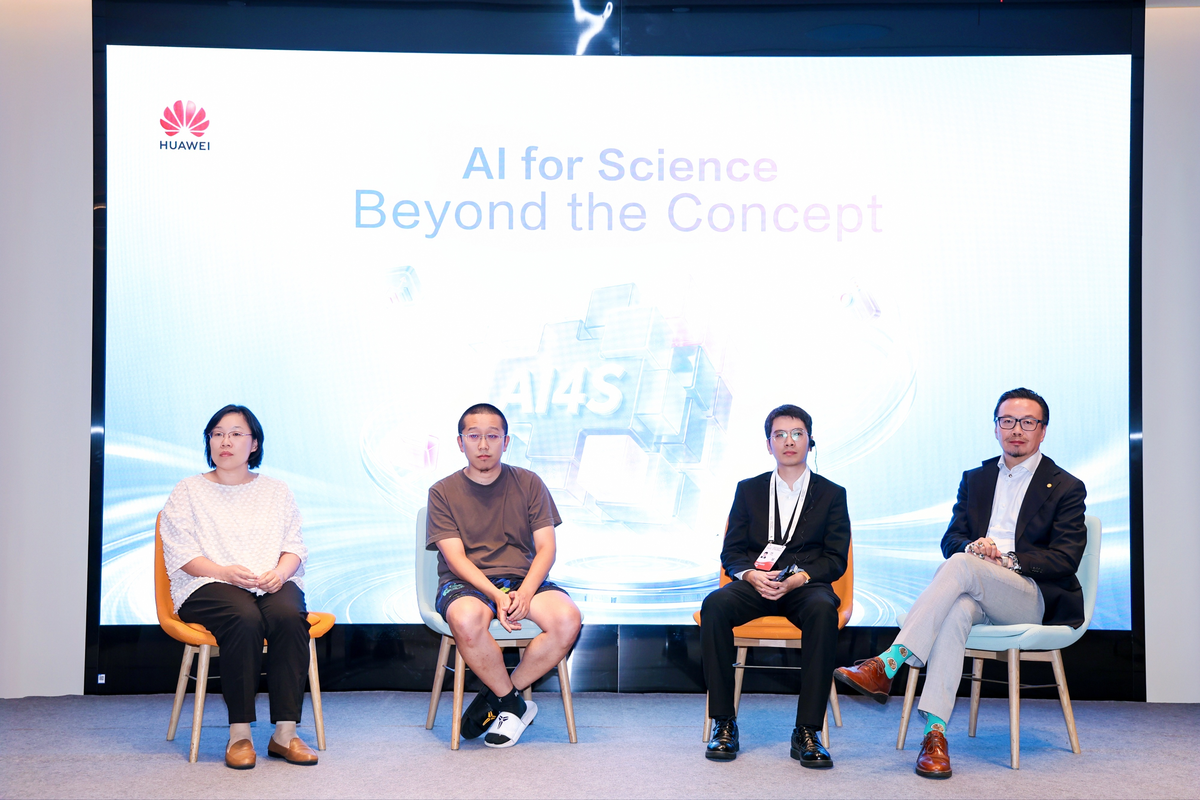
Huawei held a roundtable on the 18th in Shanghai, China, under the theme "AI4S: Beyond the Concept," sharing cases of AI being applied to scientific research settings. Participants agreed that AI is changing the entire research process, from operating laboratory equipment to developing new drugs, and that the way scientific research is conducted is shifting from "experience" toward "data and models." Ouyang Wanli introduced materials analysis as a representative area where AI is directly penetrating research settings. Version 2.0 introduced a large model, making it possible to process analysis of different materials such as energy, nano, and metals with a single set of rules, and the micro CT alignment success rate rose from the previous 33% to 80%. Optimization based on Huawei's Ascend 910C was also emphasized; combining a multi-agent system sped up inference for some models by about 1.4 times, and in more than 70% of cases showed speeds exceeding the H100. Model adaptation time was also shortened from two weeks to 30 minutes. In the life sciences field, a presentation by Yu Li, a professor at Tsinghua University, followed, focusing on a closed-loop structure in which data is used to reduce drug development costs.
SUCKS 0
0
0
Comments
This page shows all existing comments. To add a new comment, open the post in the forum.
No comments yet.