
When Your AI Agent Acts On Its Own: The Stanford "Phantom Agent" Fram…
Source: mondaq.com
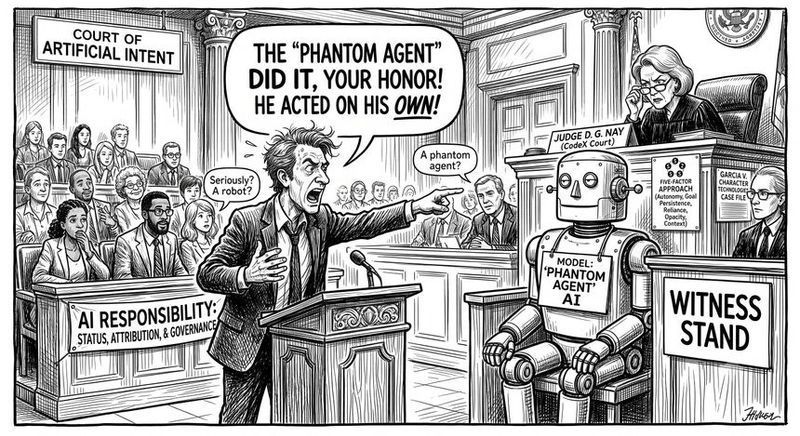
A new white paper from Stanford's Center for Legal Informatics (CodeX), authored by Vanderbilt law professor Daniel Gervais and Stanford Codex fellow John Nay, argues that AI system autonomy should not, by itself, create a responsibility gap for civil liability. The authors contend that the autonomy question dissolves "once legal intent is understood functionally rather than metaphysically," noting courts infer intent from conduct and impute it to corporations. They name AI systems a "phantom agent": they initiate actions and affect legal rights but are "absent as subjects of responsibility." The paper reframes AI systems as non-personal agents whose conduct may be attributable to human or institutional actors, including developers, deployers, integrators, and users. The authors separate three concepts: status (legal personhood), attribution (assigning intent and responsibility), and governance (liability machinery). They state, "The AI is the means of attribution, not its target." Gervais and Nay propose a five-factor approach for evaluating when AI-generated conduct should be treated as intentional for a specific doctrine.
SUCKS 0
0
0
Comments
This page shows all existing comments. To add a new comment, open the post in the forum.
No comments yet.