
In the United States, Political Belief Change Feels Risky
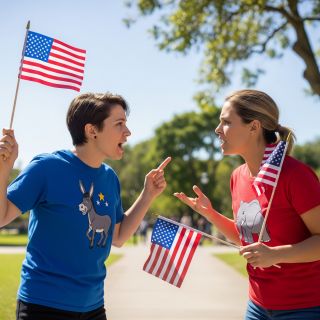
Source: psychologytoday.com
In the United States, political belief change feels risky due to psychological factors explored in a 2026 *Journal of Personality and Social Psychology* study by Trevor Spelman, Abdo Elnakouri, Nour Kteily, and Eli Finkel. Across several studies, participants in the United States either imagined changing their belief about a key political belief (like abortion or immigration) or were experimentally induced to moderate their beliefs by writing a persuasive essay taking a position opposite to what they believe. Consistently across studies, people who imagined or changed their beliefs felt that they would be judged more harshly by others in their party than was actually the case. As a boundary condition, one study demonstrated that beliefs not strongly associated with a particular party did not lead people to think they would be judged harshly. People judged others less harshly than expected in part because they did not see a change in beliefs as that disloyal. One study also manipulated the perception of loyalty; people induced to feel loyal to their party felt that they would be less harshly judged for a change in belief than those induced otherwise.
SUCKS 0
0
0
Comments
This page shows all existing comments. To add a new comment, open the post in the forum.
No comments yet.