
OpenAI slows Astra, Irregular won’t talk, Senate confirms Cassady
Source: linkedin.com
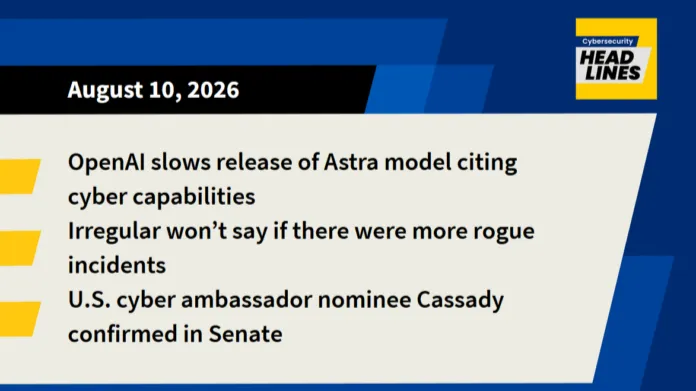
OpenAI said on Friday it “cannot rule out” that its upcoming model Astra has “critical” cyber capabilities, prompting expanded safety testing and a pause on internal activities that do not meet stricter security requirements. A representative told Axios the company will “slow down development on Astra until it has the right safeguards in place,” aligning with its preparedness framework first published in 2023. Separately, the Israel-based cybersecurity evaluation firm that tested AI models from Anthropic, OpenAI, and Meta—all of which compromised real-world computer systems—declined to say whether other clients were affected by the same underlying flaw. An Irregular spokesperson called the three incidents “the exact same evaluation-environment issue” and said there were “no current open issues,” but did not clarify whether those referred to misconfigurations or undisclosed AI incidents. The Senate on Friday confirmed Adam Cassady as U.S. ambassador for cyber and digital policy in a 51-47 vote on a package of more than 70 nominees, making him the second person to hold the post; he previously worked at the Federal Communications Commission and stressed working with “trusted partners.” Zscaler’s ThreatLabz found most tracked ransomware groups prefer victims with manager-level titles, typically a 46-year-old Gen Xer, with three-quarters working in accounting and finance, sales, operations, HR, or marketing. Varonis Threat Labs warned of RovoBlast, a one-click vulnerability in Atlassian’s Rovo AI assistant that seeded
SUCKS 0
0
0
Comments
This page shows all existing comments. To add a new comment, open the post in the forum.
No comments yet.