
Deep Learning Pipeline Evaluates Weed Competition Pressure and Crop R…
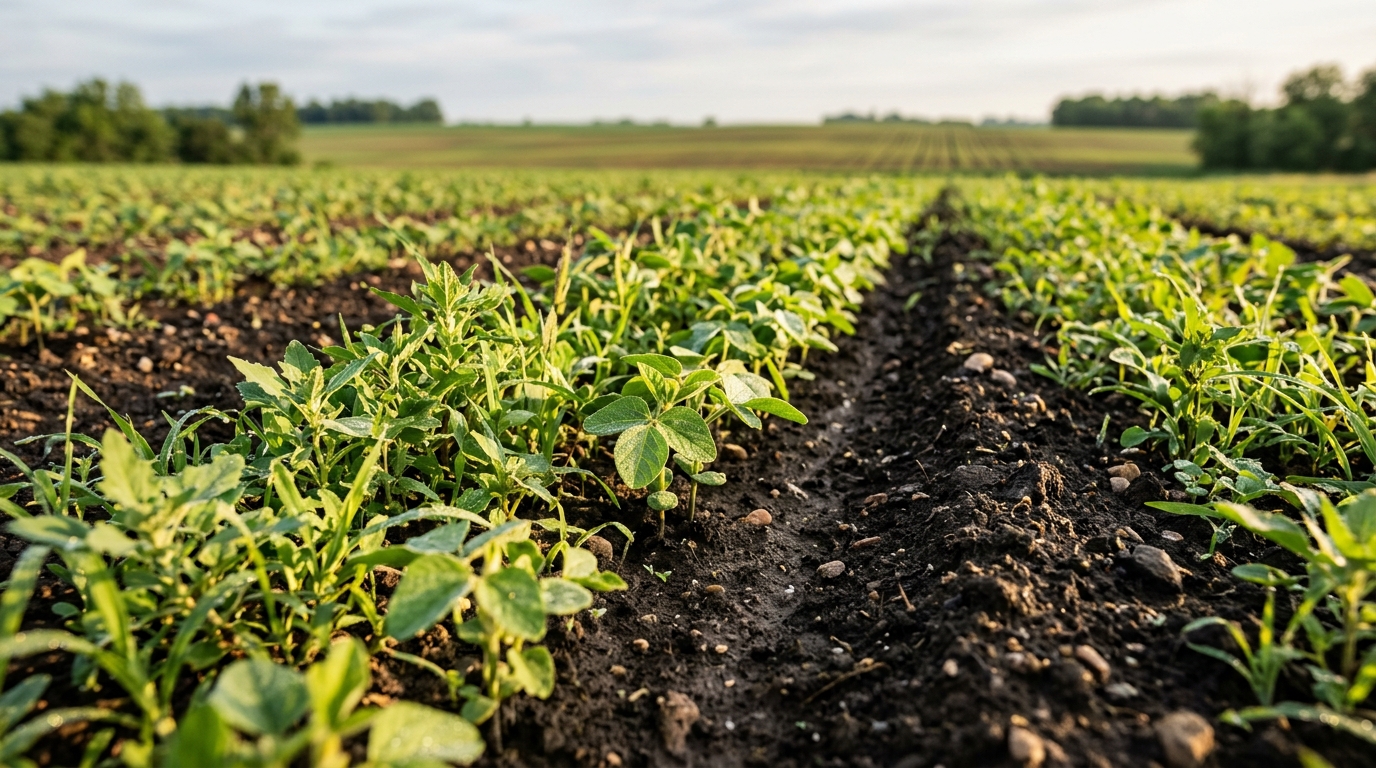
Source: bioengineer.org
A deep learning framework integrating species classification, conditional pixel segmentation, and ecological proxy modeling can quantify weed competition pressure and stratify field-level crop risk from standard red-green-blue imagery, according to an experimental investigation published in Discover Life. The research team, led by G. V. S. Narayana alongside Murali Gopal Kakita, Punyaban Patel, Sanjay Kumar Kuanar, Sudheer Babu Punuri, and Kranthi Kumar Singamaneni, designed the pipeline to bridge the gap between visual weed detection and actionable agronomic decision-making. Operating across three diverse agricultural image collections, the architecture achieved a 99 percent classification accuracy on multi-species weed benchmarks and demonstrated strong regression consistency in computing a composite multi-feature risk index, yielding coefficient of determination values exceeding 0.91 on large-scale field imagery and 0.996 on fine-grained sugar beet datasets. The investigators emphasized that the pipeline provides deterministic, proxy-derived assessments of relative weed pressure without relying on ground-truth crop yield measurements or biomedical experimentation. The study addresses weed competition, a biotic stress that depresses crop productivity by competing for soil moisture, sunlight, physical space, and macronutrients such as nitrogen, phosphorus, and potassium. In India, sustaining crop yields is vital to food security amid population growth and resource limitations. Earlier evaluations cited in the investigation show weed interference can induce harvest losses ranging from 5 percent to 50 percent. Conventional uniform broadcast spraying of herbicides treats non-infested zones unnecessarily, escalating
SUCKS 0
0
0
Comments
This page shows all existing comments. To add a new comment, open the post in the forum.
No comments yet.