
Guru Purnima in the Age of AI Why the Ancient Guru Matters More Than …
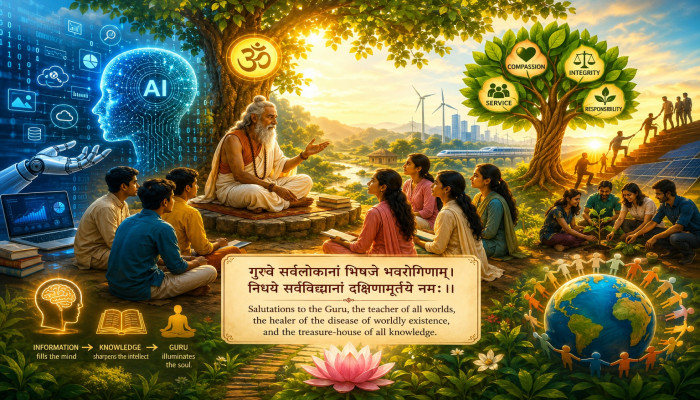
In an age where information is available in seconds, wisdom has become increasingly scarce, and anxiety, loneliness, confusion, and lack of purpose among young people are at unprecedented levels, making Guru Purnima a relevant civilisational festival for the twenty-first century. The Sanskrit word Guru is derived from Gu (darkness) and Ru (the remover), distinguishing between information, knowledge, and wisdom. The Mundaka Upanishad (1.2.12) instructs seekers to approach a Guru who is well-versed in the scriptures and established in Brahman. The Bhagavad Gita (4.34) emphasises approaching the wise with humility, sincere inquiry, and service. The Shvetashvatara Upanishad (6.23) states that truths reveal themselves to one with supreme devotion to God and equal reverence to the Guru. The Taittiriya Upanishad (1.11) instructs to regard the teacher as divine, recognising the sacred role of one who transforms another human being.
SUCKS 0
0
0
Comments
This page shows all existing comments. To add a new comment, open the post in the forum.
No comments yet.