
Three Things DSP Adoption Can Teach Us About Edge AI
Source: semiengineering.com
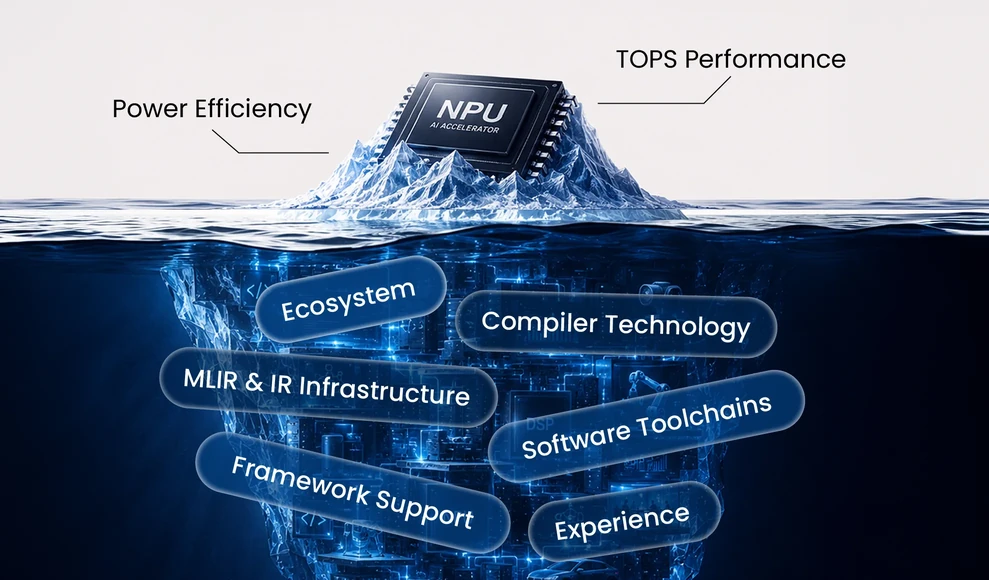
Edge AI is reaching an inflection point similar to Digital Signal Processors (DSPs) in the 1990s, facing adoption challenges including the need for powerful specialized hardware, fragmented tooling, and significant complexity for developers. DSPs gained traction due to better power efficiency and performance for workloads that general-purpose processors handled inefficiently, benefiting audio, image processing, storage, communications, and control applications. However, what limited DSP adoption was not the silicon but the development model, a challenge relevant as edge AI moves from innovation to large-scale deployment. DSPs became mainstream only when software tooling, compiler support, and ecosystem maturity made specialized compute practical for embedded developers. Similarly, Neural Processing Units (NPUs) and AI accelerators can deliver gains in throughput, latency, and energy efficiency, but broader adoption depends on developers deploying edge AI efficiently across heterogeneous systems without fragmented, vendor-specific workflows. Factors that slowed DSP adoption remain relevant, such as too much specialization, proprietary tools, and burden on developers. Three lessons for edge AI include: performance alone does not create a platform; DSPs solved a compute problem but often created a software problem; and a high-performance NPU does not create platform value unless developers can integrate it into production software without excessive custom work.
SUCKS 0
0
0
Comments
This page shows all existing comments. To add a new comment, open the post in the forum.
No comments yet.