
AI Audio and Voice Generation Guide from Script to Sound
Source: editorialge.com
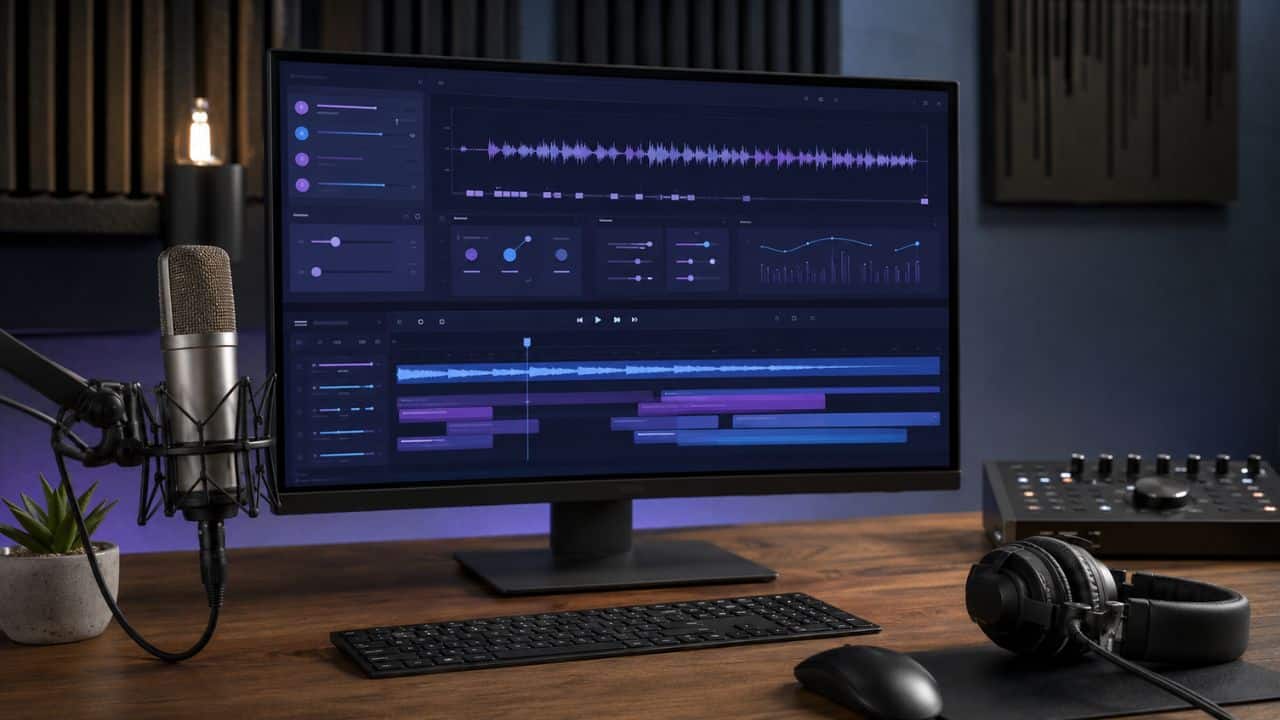
AI audio tools can turn a written script into narration, build conversations between speakers, generate background music, or develop a hummed melody into a song, according to a guide on ImagineLab.art. The platform brings voice and music generation into one browser-based workspace, with tasks including video narration, audiobook passages, advertisements, podcast-style exchanges, character conversations, synthetic authorized voices, text-to-song, lyrics-to-song, hum-to-song, instrumental tracks, and short clips. The guide notes that tasks are not interchangeable; a cloned voice preserves a speaker’s vocal identity, while Hum to Song uses a recording as musical direction and does not create a reusable copy of the singer’s voice. The current ImagineLab model catalog lists 37 models across image, video, voice, music, writing, and infographic tools. Voice Lab and Music Lab use the same Editorialge Token, or EDT, wallet, and share generation history, saved sessions, templates, prompt enhancement, playback, downloading, and sharing. Access to individual models may depend on the pricing package. Voice Lab currently offers two text-to-speech engines: ElevenLabs v3 and Gemini 3.1 Flash TTS, both available for single-speaker and multi-speaker work. The guide emphasizes that the underlying model, script or prompt quality, and final review shape the output, and advises choosing the right tool, giving useful direction, and catching problems before audio reaches an audience.
SUCKS 0
0
0
Comments
This page shows all existing comments. To add a new comment, open the post in the forum.
No comments yet.