
Machine learning reads conservation test papers to reconstruct old ink
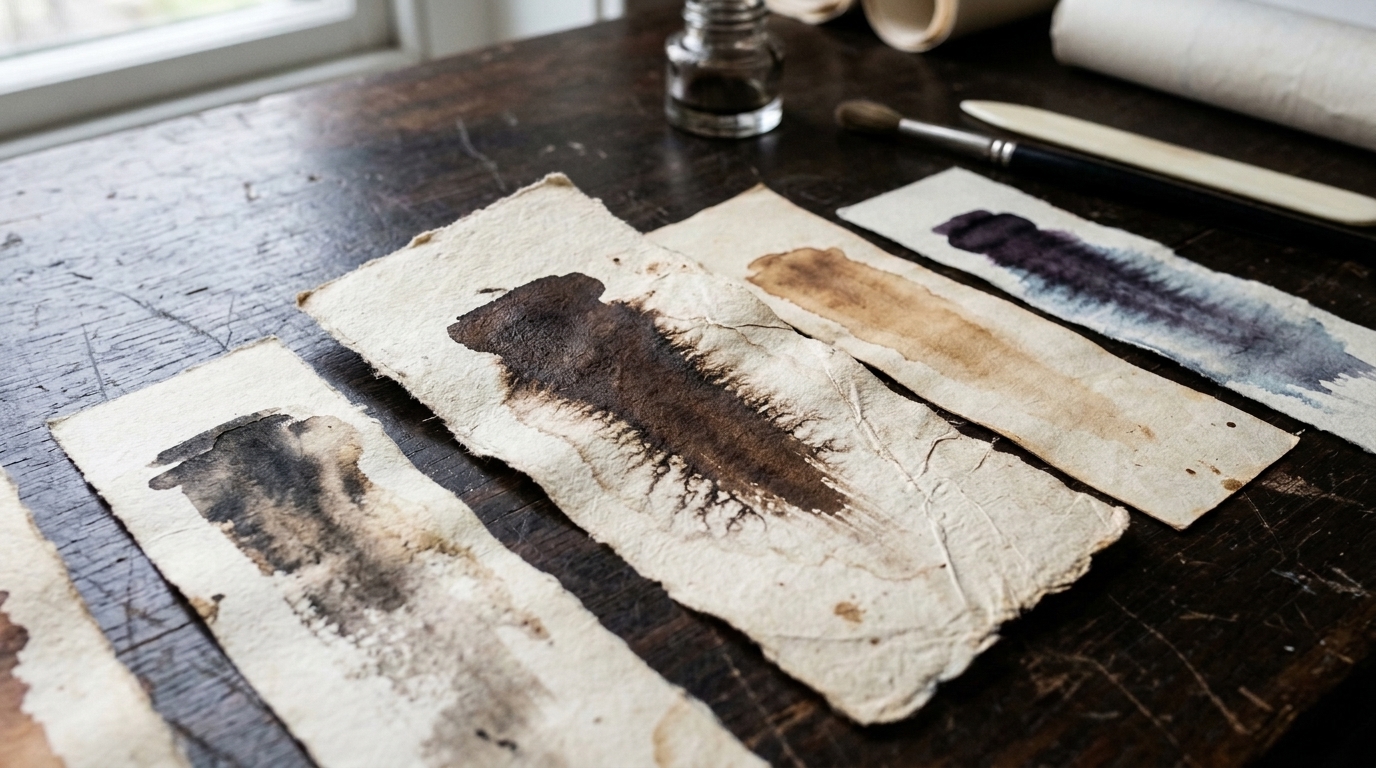
Source: bioengineer.org
Machine learning can reconstruct the elemental composition of historical iron gall inks from conservation test papers already pressed against manuscripts, according to research by researchers in Poland and Slovenia published in Results in Chemistry. The approach combines bathophenanthroline indicator papers with laser ablation inductively coupled plasma mass spectrometry and neural networks to recover chemical information from documents that must never be sampled directly. It was tested on some of Poland’s most treasured manuscripts, including marginal notes written by Nicolaus Copernicus and the Constitution of 3 May 1791. Iron gall ink dominated European writing for nearly a thousand years, and because scribes prepared it from individual recipes, its final chemical composition varied greatly. Iron is the key chemical marker, but the inks also carry sulfur, aluminum, copper, zinc, manganese and lead, which may originate from metal salts, plant-derived tannins, gums or impurities in historical raw materials. Elemental relationships are more informative than absolute signal intensities alone, since inked areas are heterogeneous at the microscale due to uneven deposition, aging and migration. A statistical investigation of manuscripts in the Central Archives of Historical Records in Warsaw found signs of corrosion of different degrees in nearly 85 percent of the archival units examined, and 95 percent of the examined inks contained Fe(II). Conservation practice already relies on indicator papers soaked with bathophenanthroline, which allow colorimetric detection of Fe(II); when moistened and pressed against a letter for about 30 seconds, the indicator turns magenta if Fe(II)
SUCKS 0
0
0
Comments
This page shows all existing comments. To add a new comment, open the post in the forum.
No comments yet.