
AI and green radio hardware may hold the key to carbon-neutral 6G net…
Source: bioengineer.org
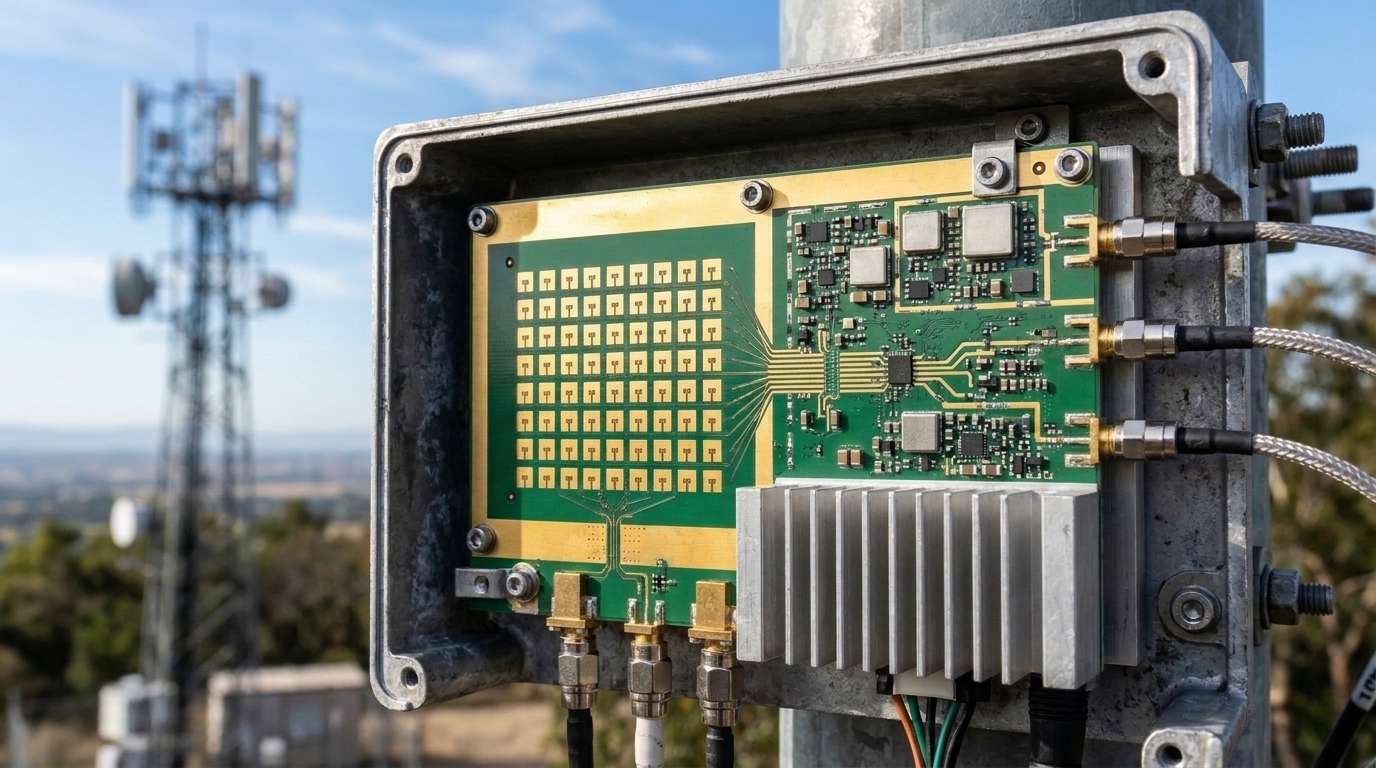
A narrative review published on 29 July 2026 in Discover Networks, led by Ogenyi Fabian Chukwudi and colleagues, argues that carbon-neutral 6G will only be achievable if artificial intelligence optimization, green radio-frequency hardware, and lifecycle sustainability assessment are managed together rather than in isolation. The review synthesizes recent literature on hybrid AI-driven eco-energy management and lays out a roadmap for environmentally sustainable next-generation wireless systems. It identifies that technologies expected to define 6G are themselves energy-hungry: terahertz communication and ultra-massive multiple-input multiple-output systems require dense antenna arrays, advanced beamforming algorithms, high-frequency radio components, and sophisticated signal processing, which can increase power consumption, cooling requirements, hardware complexity, and manufacturing-related environmental impact. AI-native network orchestration adds demand because large-scale model training, continuous inference, data exchange, and distributed learning contribute computational carbon emissions. Reconfigurable intelligent surfaces can reduce reliance on energy-intensive active radio chains and lower transmission power requirements, yet fabrication of metasurfaces, semiconductor control circuits, and supporting infrastructure may generate substantial embodied carbon. The authors introduce three literature-derived conceptual frameworks: the Green RF Technology Evaluation Matrix (GRTEM), the Hybrid AI for Sustainable Power Allocation framework (HYASPA), and the Eco-Digital Twin Architecture (Eco-DTA), which the review describes as analytical synthesis models rather than validated deployment architectures, requiring future validation through simulations, benchmark datasets, and real-world 6G test environments.
SUCKS 0
0
0
Comments
This page shows all existing comments. To add a new comment, open the post in the forum.
No comments yet.