
Multimodal Edge AI System Accurately Detects Driver Impairment in Rea…
Source: bioengineer.org
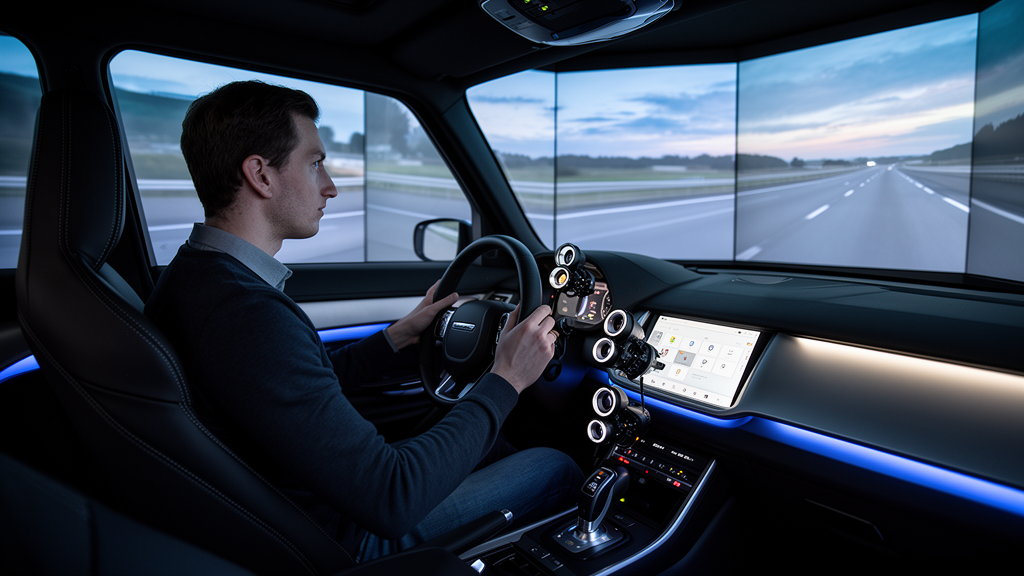
A research team led by Jun Hu has engineered an edge-deployed driver state intervention system that unites multimodal behavioral and physiological telemetry with localized large language model reasoning, achieving an integrated detection accuracy of 93.8 percent in controlled evaluation trials, as detailed in the journal Discover Computing. Operating on an embedded edge computing platform, the system synchronously extracts and analyzes visual cues, inertial head kinematics, and cardiovascular signals to identify progressive fatigue, cognitive distraction, and acute physiological stress. Combining lightweight temporal deep learning with an edge-accelerated language model, the architecture maintains a perception latency between 180 and 250 milliseconds while suppressing the false alarm rate to 3.8 percent. The development addresses deficiencies in conventional Driver Monitoring Systems that relied on unimodal inputs such as dashboard cameras or steering wheel grip sensors, which degrade under ambient illumination shifts, partial facial occlusions, driver eyewear, or extreme head angles, and fail to detect internal physiological duress before outward physical manifestations emerge. Traditional intervention logic relies on rigid, deterministic threshold triggers that misinterpret benign maneuvers like blind-spot shoulder checks as hazardous distractions, generating alarm fatigue. The researchers constructed a four-tier architecture dividing tasks across data acquisition, inference, decision-making, and interaction layers, with hardware execution shared between an STM32-based lower-level microcontroller and an NVIDIA Jetson Nano edge computing terminal.
SUCKS 0
0
0
Comments
This page shows all existing comments. To add a new comment, open the post in the forum.
No comments yet.