
Model Pinning as Regulatory Primitive: Why “We Upgraded” Isn’t a Comp…
Source: hackernoon.com
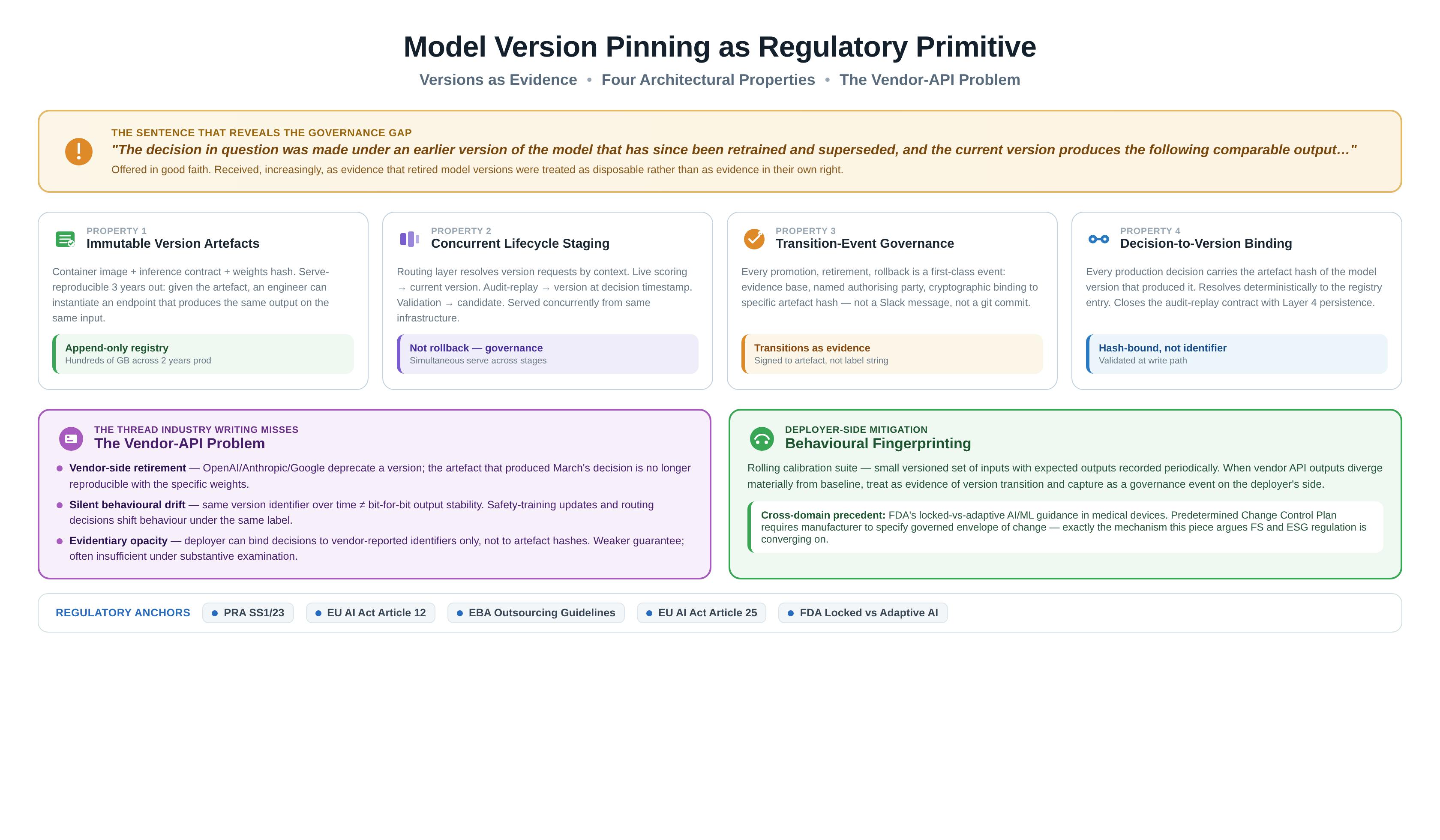
Engineering teams deploy newer AI models as soon as they are better, while regulators need the model that was live on the day a specific decision was made to remain inspectable three years later, creating an architectural tension that most enterprise AI deployments are structurally on the wrong side of, according to the article. It describes model version pinning as a first-class governance primitive whose absence turns routine regulatory queries into disclosed material weaknesses. The article cites a recurring statement in incident reports, audit responses, and regulatory correspondence that a decision was made under an earlier model version since retrained and superseded, with the current version producing comparable output—offered as a good-faith engineering response but increasingly received as evidence of governance failure because the organisation did not treat the retired model version as evidence worth preserving. In most enterprise AI systems, the model in production is a single, mutable artefact updated on a cadence set by the ML team, with the old version retired and the new one deployed. The article states this pattern is coherent if the system's function is to produce the best available output at any moment, but architecturally incompatible with producing defensible outputs whose historical instances remain inspectable, and that regulatory frameworks in financial services, climate disclosure, medical devices, and consequential public-sector determinations converge on the second assumption, asking whether the historical model version can be produced as evidence and whether governance over version transitions can be demonstrated.
SUCKS 0
0
0
Comments
This page shows all existing comments. To add a new comment, open the post in the forum.
No comments yet.