
Real-Time Decoding of Human Emotion States Using Integrated Gray and …
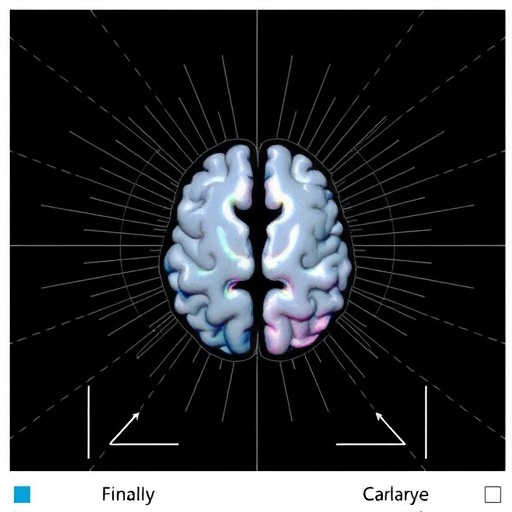
Source: bioengineer.org
Researchers have advanced emotion-sensing brain technologies by decoding continuous human emotional states—specifically valence (pleasantness) and arousal (activation)—from intracranial neural recordings with performance strong enough for real-world use. The study used intracranial electroencephalography (iEEG) and integrated signals from both gray matter and white matter to capture complementary encoding mechanisms. Experiments involved 18 participants who underwent two separate emotion-eliciting tasks, providing abundant self-rated measures of valence and arousal. Using a personalized deep-learning framework, the models achieved high-performance tracking of continuous valence and arousal, surpassing earlier EEG and iEEG decoding approaches, with performance gains depending substantially on combining gray- and white-matter iEEG features. Cross-task testing showed decoders could carry learned emotion representations from one context to another. Analysis pointed to shared and preferred mesolimbic–thalamo–cortical subnetworks as key contributors to encoding both valence and arousal. The system produced reliable emotion estimates not only for the original cohort but also for four new individuals, suggesting the approach can scale beyond training subjects.
SUCKS 0
0
0
Comments
This page shows all existing comments. To add a new comment, open the post in the forum.
No comments yet.