
AI Is on the Verge of Cracking the Mystery of Irreversible Human Aging
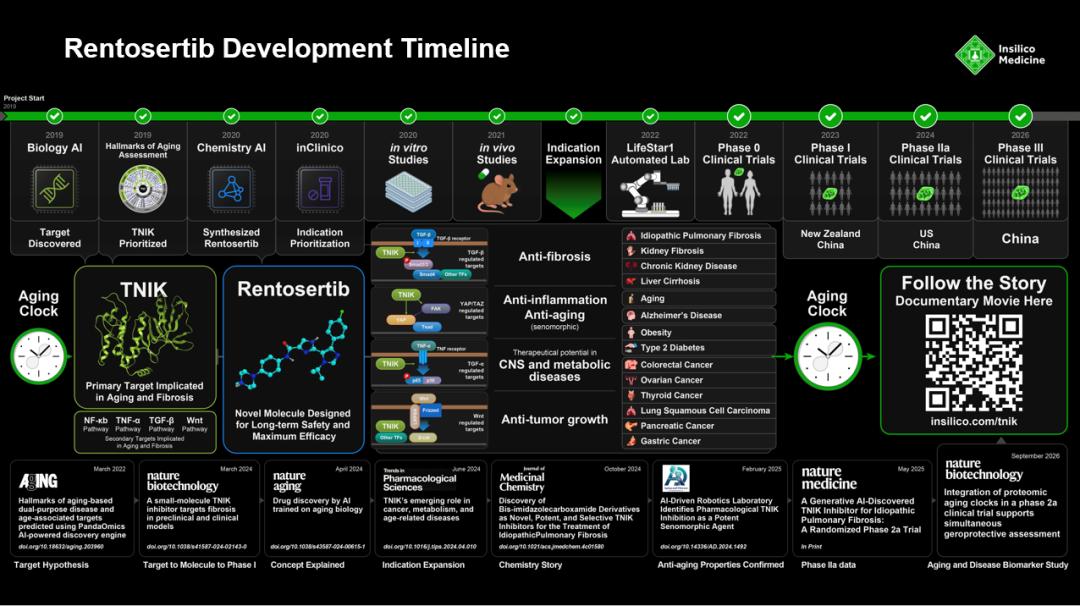
Source: eu.36kr.com
In September 2026, 42 people with an average age of 67 became younger simultaneously on six different clocks after taking a drug named rentosertib for four weeks, according to GeekPark. Nearly 3000 proteins in patients were tested, among which 326 showed significant changes, and six sets of models developed by different teams all agreed that their bodies were moving towards a younger direction. Most of the clocks turned back 3 to 4 years, and one turned back nearly 6 years. The drug was developed by AI from Insilico Medicine, an AI pharmaceutical company listed on the Hong Kong Stock Exchange and currently one of the global leaders with the fastest clinical progress in AI drug development. AI helped identify targets from massive biological data and then design molecules that can act on these targets. Rentosertib has entered Phase III clinical trials. Alex Zhavoronkov, founder of Insilico Medicine, told GeekPark he publishes an average of one paper every six days and called this research "the most important paper in my life." The article notes that in the 1950s scientists began formally discussing "biological age," but how to measure this age has troubled researchers for decades, with the real turning point occurring around the time of the article's end.
SUCKS 0
0
0
Comments
This page shows all existing comments. To add a new comment, open the post in the forum.
No comments yet.