
DeepMind Founder's Ultimate Test: Give AI a 1901 World — Can It Inven…
Source: finance.biggo.com
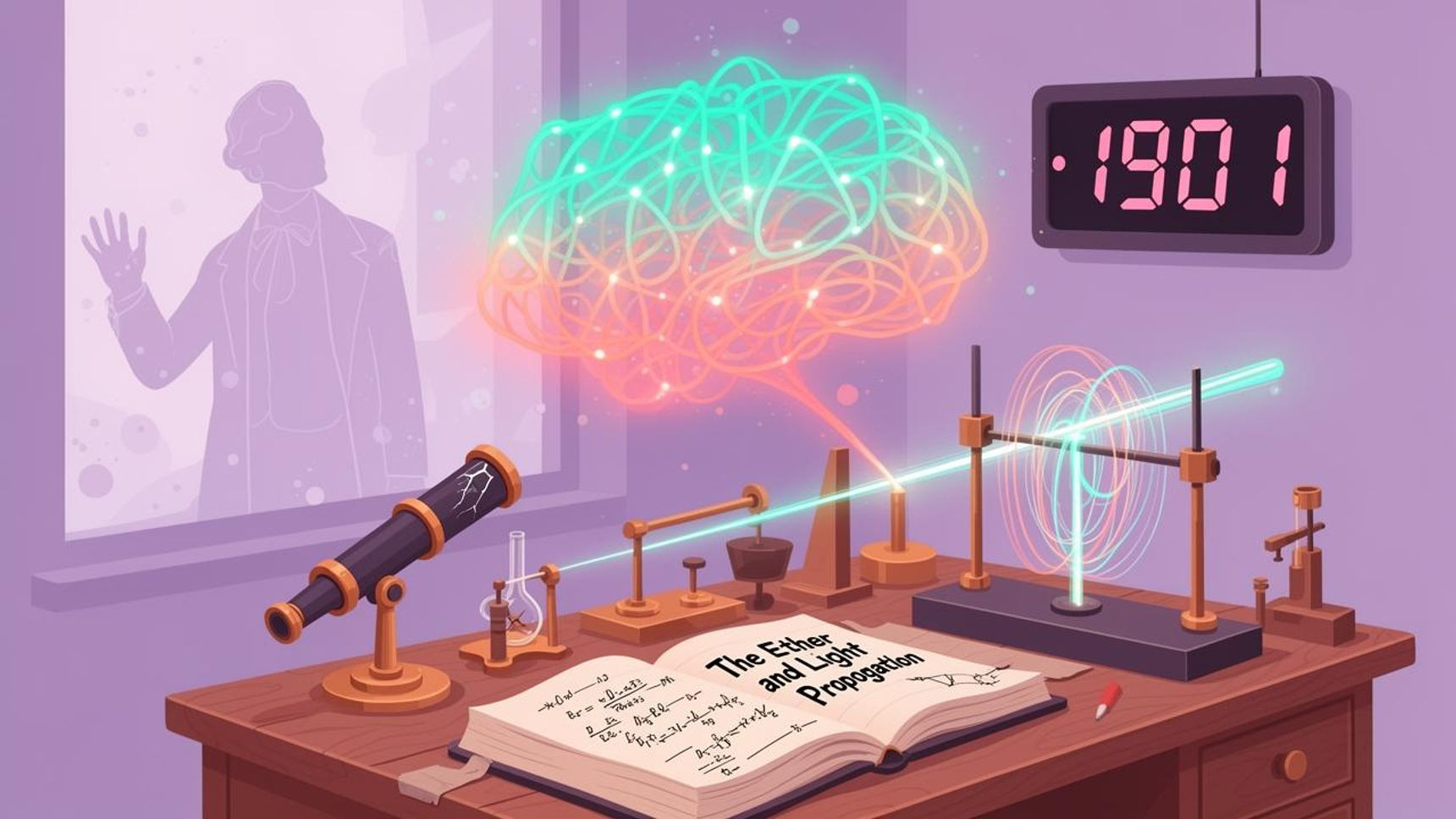
In a thought experiment posed by Google DeepMind CEO Demis Hassabis, the question of whether a top-tier artificial intelligence, sent back to before 1905 and fed only the knowledge available to Einstein's contemporaries, could replicate the discovery of special relativity is sparking intense debate. Hassabis leans toward a negative conclusion, arguing that even if given all physics literature predating 1901, AI would still be unable to independently propose special relativity. The reason lies not in insufficient computing power or a lack of data, but in the fact that special relativity fundamentally redefined how humanity understands time, space, and motion. Hassabis draws a strict distinction between finding an optimal solution within an already-defined problem framework and proposing entirely new theories and hypotheses, stating that only the latter truly touches the core of creativity. The test interrogates whether a new theory will naturally emerge from old knowledge if all precursor materials are in place, a question tied to Thomas Kuhn's concept of the "paradigm" from *The Structure of Scientific Revolutions*. Within a stable paradigm, most research is "normal science," solving problems according to established rules, and a scientific revolution erupts only when anomalies accumulate persistently and the existing framework proves incapable of providing a reasonable explanation.
SUCKS 0
0
0
Comments
This page shows all existing comments. To add a new comment, open the post in the forum.
No comments yet.