
Inside DARPA’s Mission to Send a Repair Robot to Geosynchronous Orbit
Source: spectrum.ieee.org
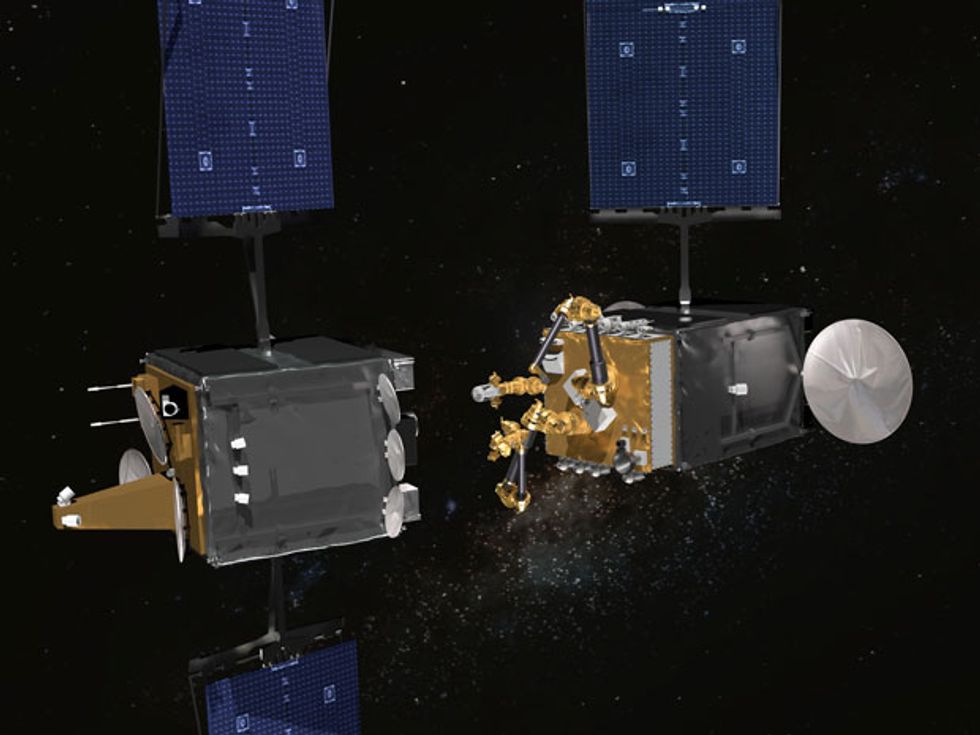
DARPA is developing a robotic spacecraft to repair and service satellites in geosynchronous earth orbit (GEO), where more than 300 commercial satellites provide services like television, radio, data transfer, weather, and telephony. These satellites, each costing hundreds of millions of dollars to build and launch, currently cannot be maintained after launch, leading to disrepair and obsolescence. Faults can only be diagnosed remotely, and hardware cannot be replaced, meaning a satellite could lose its state-of-the-art status within a typical 15-year lifetime. The Robotic Servicing of Geosynchronous Satellites (RSGS) program, a public-private partnership, builds on a decade of work by DARPA and the U.S. Naval Research Laboratory. The goal is to enable active repair and revitalization of satellites in GEO, potentially extending their investments and deferring replacement costs. Past servicing missions, such as those to repair the Hubble Space Telescope, were performed only in low Earth orbit and put human lives at risk. Sending humans to GEO would expose them to more intense radiation from solar particles and cosmic rays, making robotics necessary for economical, safe, and routine satellite repair. The project aims to develop a spacecraft with dexterous robotic arms capable of performing delicate operations on satellites never designed to be serviced.
SUCKS 0
0
0
Comments
This page shows all existing comments. To add a new comment, open the post in the forum.
No comments yet.