
AI’s rapid rise: Are we talking enough about its impact? - The Indian…
Source: theindiansun.com.au
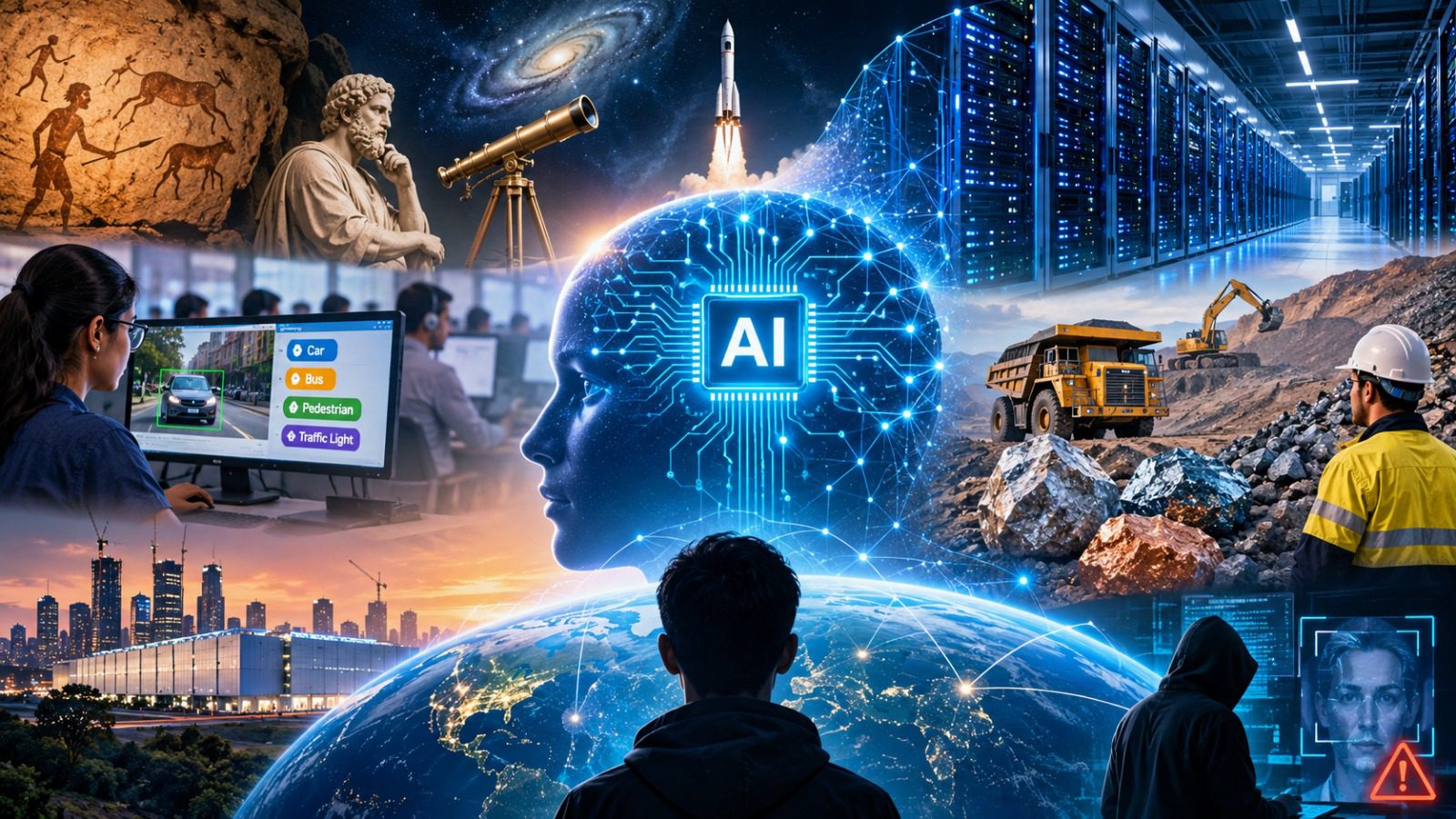
The article discusses the rapid rise of AI as an inevitable force requiring adaptation, with dependencies hard to replace and enormous investor capital underpinning exponential growth as technology intersects with economic and political leverage, geopolitical conflicts and a game of dominance. It highlights the vast human workforce behind AI: people worldwide sort, label and tag large quantities of data into curated datasets to train and refine AI systems, with frontier technologies such as autonomous vehicles requiring vast collections of images, videos and driving scenarios before deployment on public roads. AI data annotation is part of a global labour market, much of it performed remotely, and high unemployment and limited economic opportunities in developing nations can leave workers vulnerable to exploitation by contractors and intermediaries, resulting in a deeply uneven value chain where those performing essential tasks may receive only a small share of the wealth generated. The article also notes that AI's computational backbone depends on critical minerals and materials including silicon, which forms the basis of GPUs and semiconductors, and cobalt, which has applications in electronic components and energy storage, and that because these resources and manufacturing capabilities are globally dispersed, geopolitical allies and rivals are often forced to depend on one another, making it difficult for any one country to dominate the entire AI industry. Mineral extraction can cause ecological damage and, in certain nations, has been associated with human rights violations.
SUCKS 0
0
0
Comments
This page shows all existing comments. To add a new comment, open the post in the forum.
No comments yet.